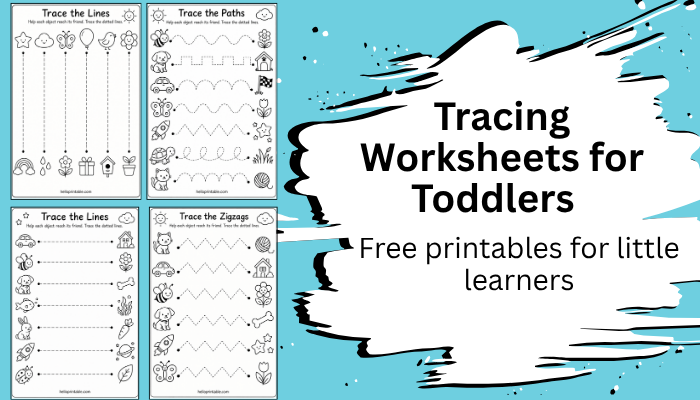
Learning to hold and control a pencil is a big milestone for little hands. Before children are ready to write letters, numbers, or their own names, they first need plenty of opportunities to practice simple pencil movements. That’s exactly what these free printable tracing worksheets for toddlers are designed to do.
This tracing worksheet pack gives young learners simple, playful paths to follow while practicing straight lines, curves, zigzags, loops, and other basic movements. Instead of asking toddlers to jump straight into handwriting, these activities help them gradually build the pencil control they’ll need later.
And because every page feels like a little activity, pencil practice feels much more like play.
Free Tracing Worksheets for Toddlers and Preschoolers
When children first pick up a pencil or crayon, drawing a controlled line can be surprisingly difficult.
Their hands are still developing the strength, coordination, and control required for writing. A simple tracing activity gives them a clear path to follow without expecting them to create shapes or letters independently.
Our toddler tracing worksheets start with easy movements and gradually introduce different types of lines.
The pack includes practice with:
- Vertical straight lines
- Horizontal straight lines
- Diagonal lines
- Curved and bouncing lines
- Zigzag lines
- Loops
- Wavy lines
- Mixed tracing paths
This variety gives children practice moving their pencils in different directions while keeping the activities simple enough for beginners.
Why Is Tracing Important Before Learning to Write?
It can be tempting to start alphabet worksheets as soon as a child shows interest in pencils.
But handwriting requires several skills working together.
A child needs to control the movement of the pencil, coordinate what their eyes see with what their hand is doing, change direction deliberately, and eventually reproduce specific shapes.
Pre-writing tracing activities give children a chance to practice these movements without also having to remember how a letter is formed.
For example, vertical and horizontal lines introduce controlled movement in basic directions. Curves help children practice smooth changes in direction. Zigzags introduce stopping and turning, while loops encourage continuous circular movements.
These same movements appear again and again when children eventually begin forming letters and numbers.
What’s Included in This Tracing Worksheet Pack?
We designed this collection to progress from easier movements toward slightly more challenging pencil-control activities.
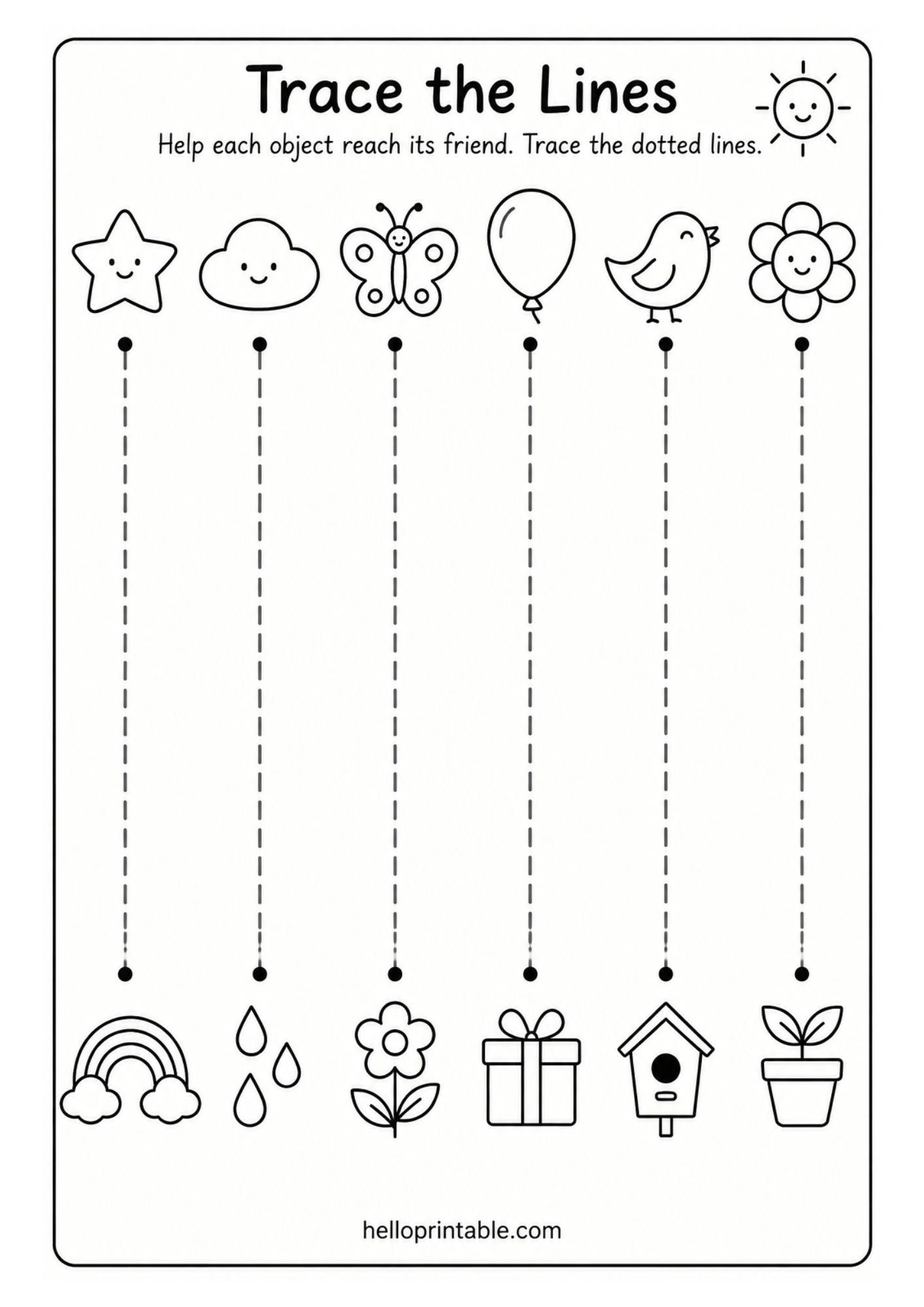
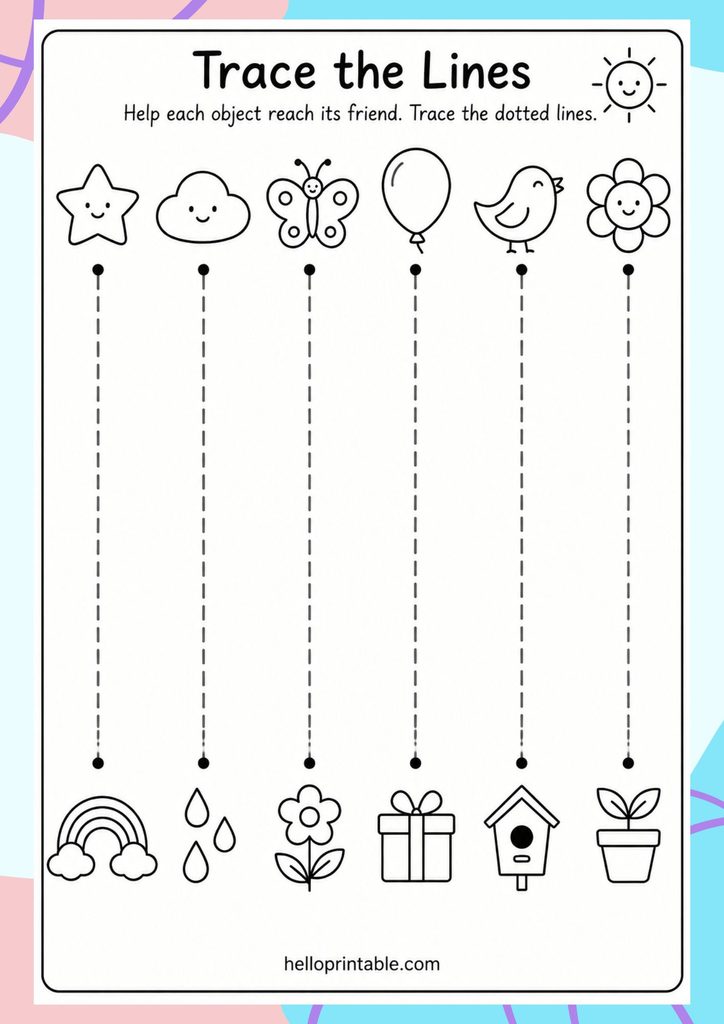
1. Vertical Line Tracing
The first worksheet introduces simple up-and-down pencil movements.
Children trace long dotted vertical lines between cute pictures. The large tracing paths give beginners plenty of room to practice without requiring extremely precise pencil control.
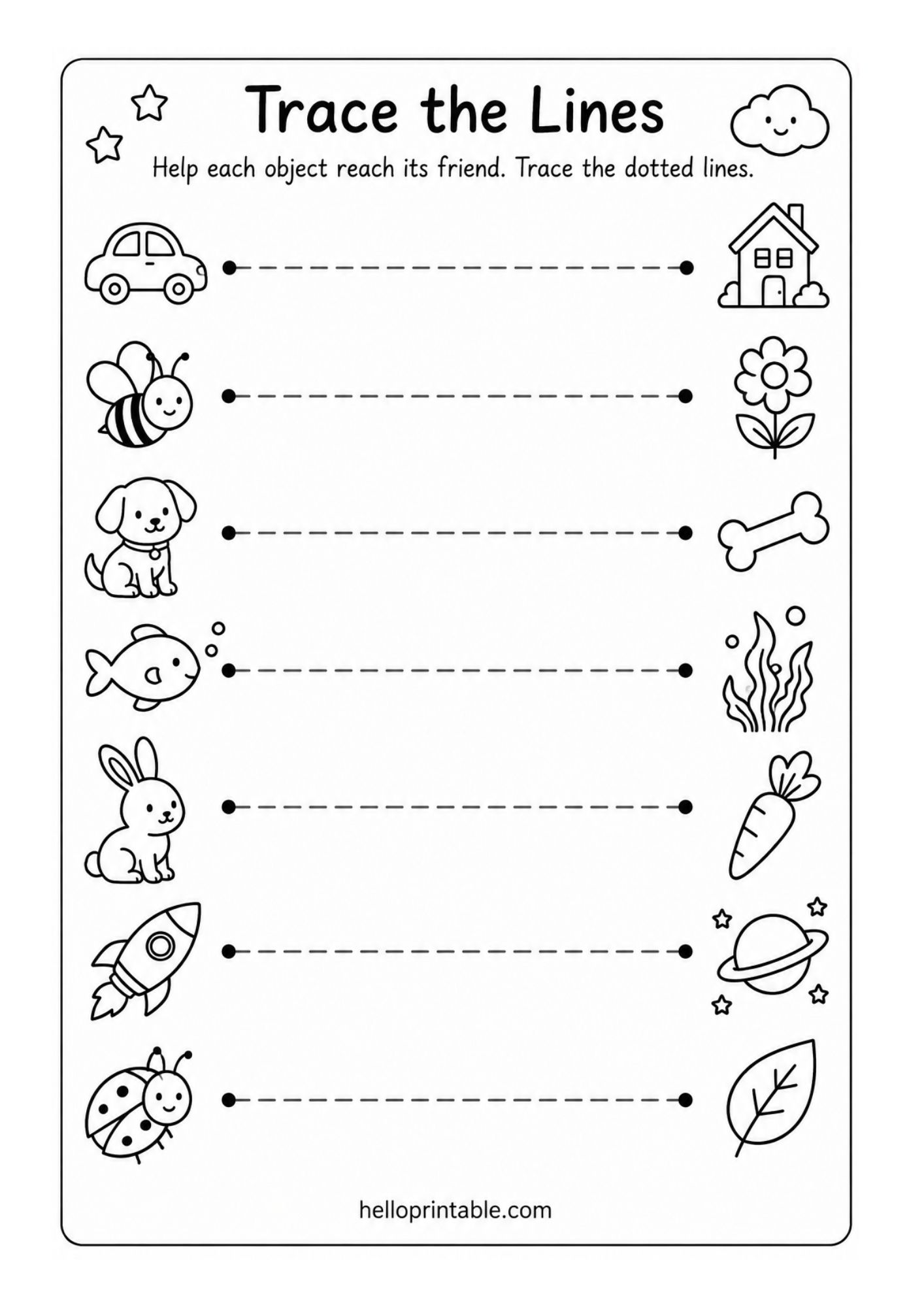
2. Horizontal Line Tracing
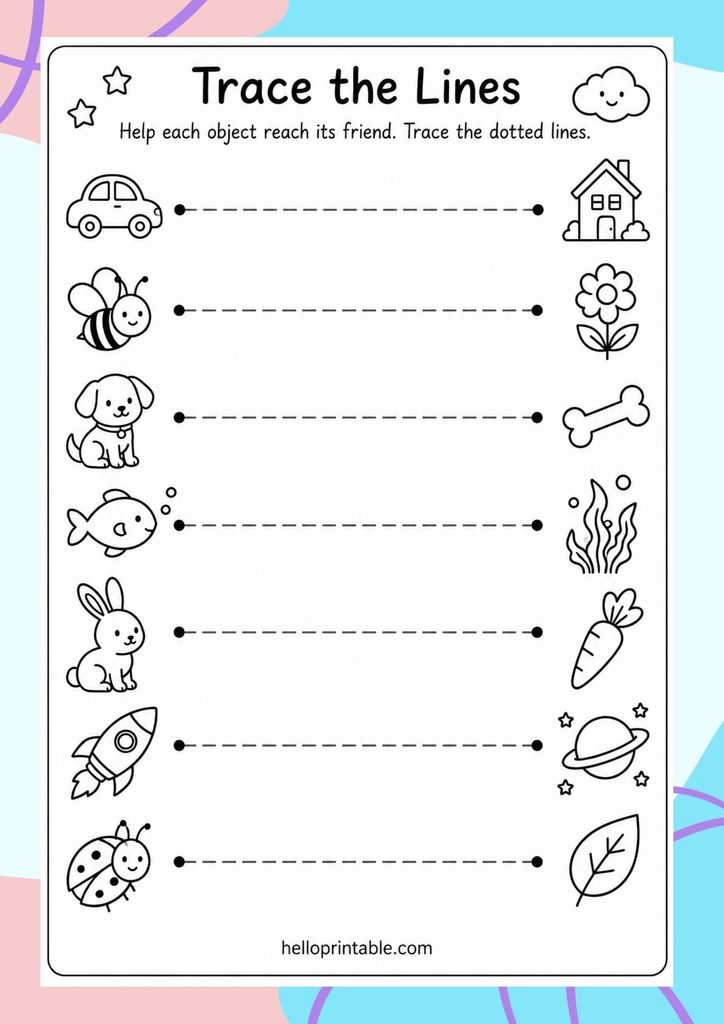
Next, children practice moving their pencil from one side of the page to the other.
These straight horizontal paths are another simple starting point for toddlers who are still learning how to guide a pencil intentionally.
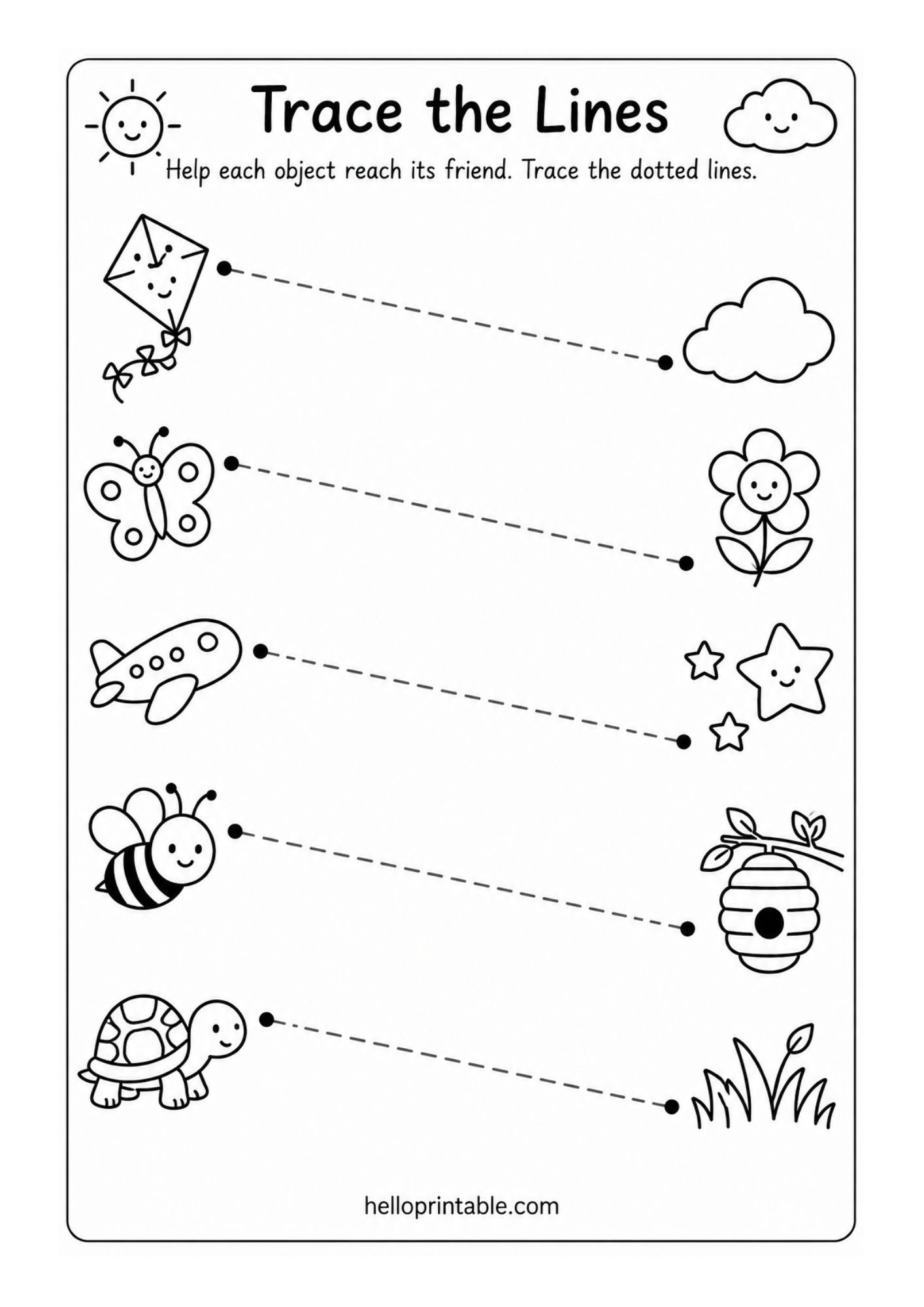
3. Diagonal Line Tracing
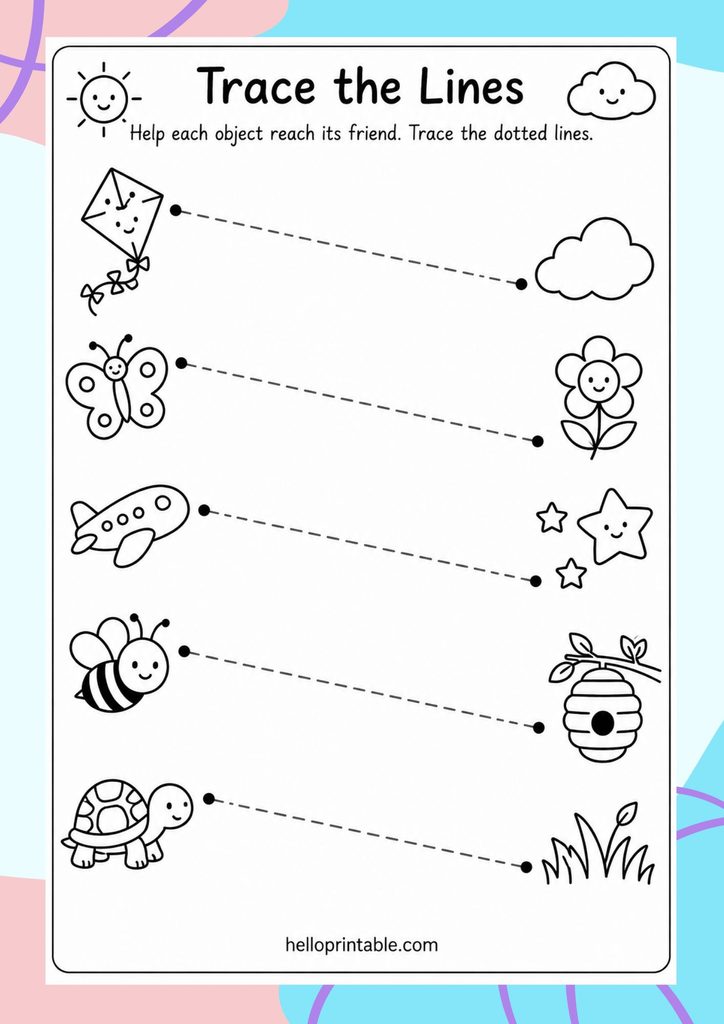
Once straight movements feel more comfortable, diagonal paths introduce a new direction.
These lines help children practice controlling the pencil while moving both sideways and vertically at the same time.
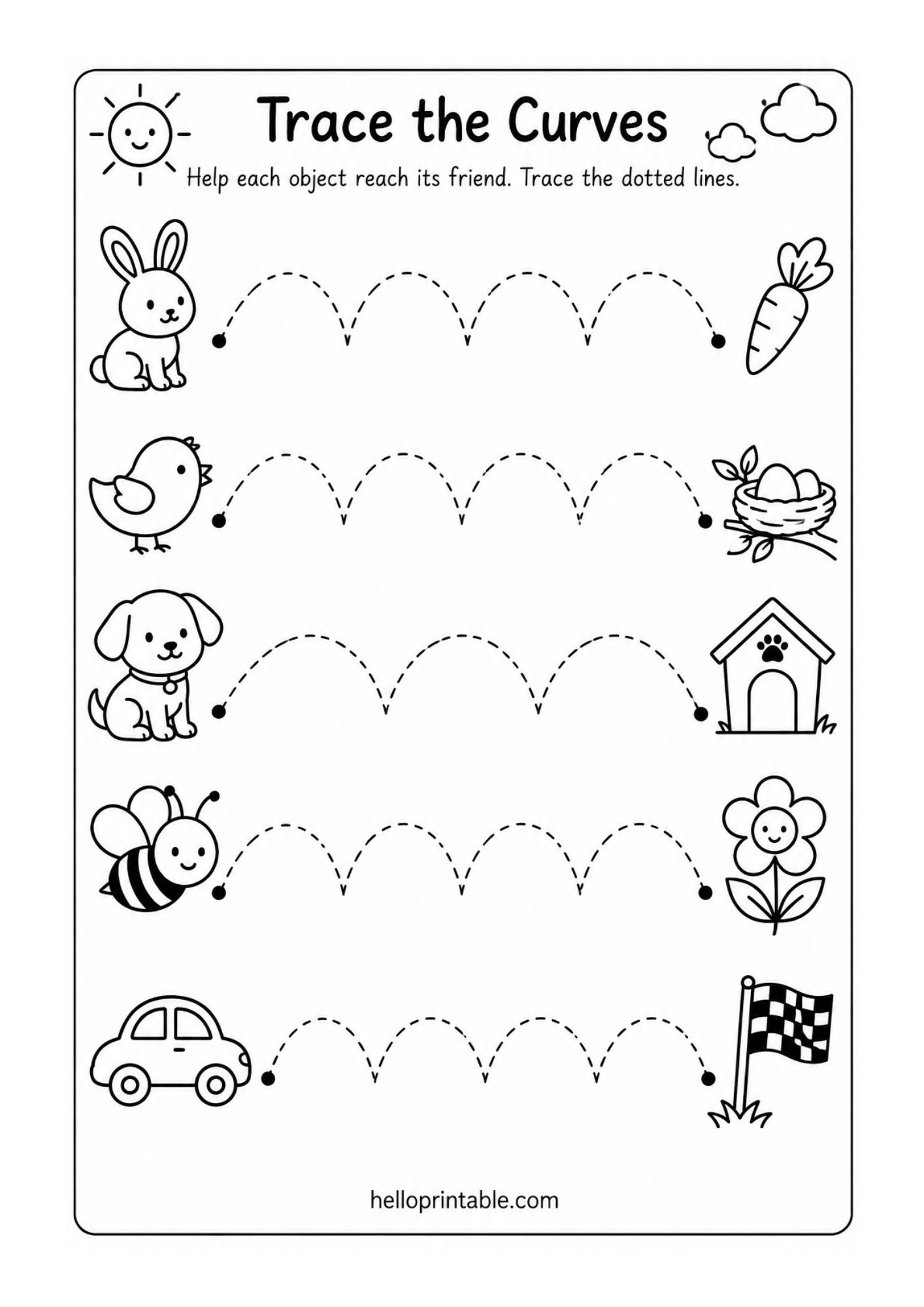
4. Curved Line Tracing
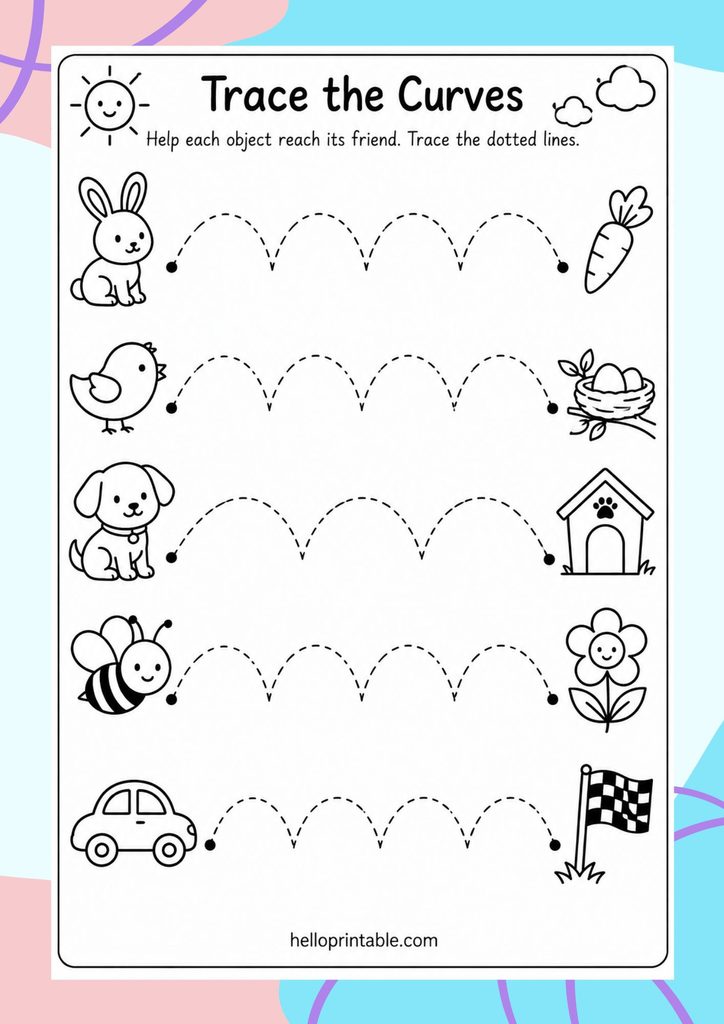
Curves require smoother, more continuous hand movements.
Our curved tracing worksheet uses large repeating arches so children can practice moving their pencils up and down without sharp stops.
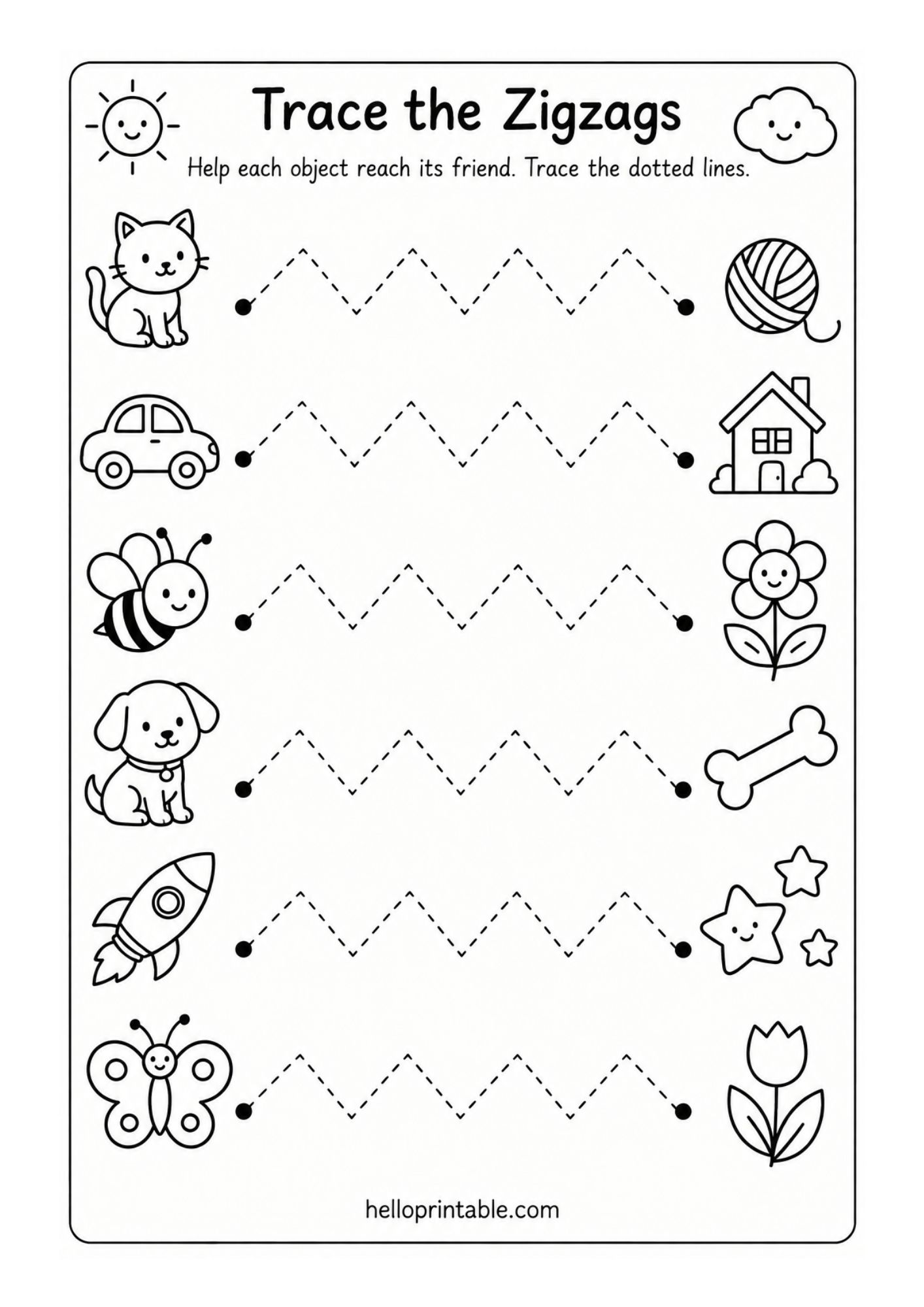
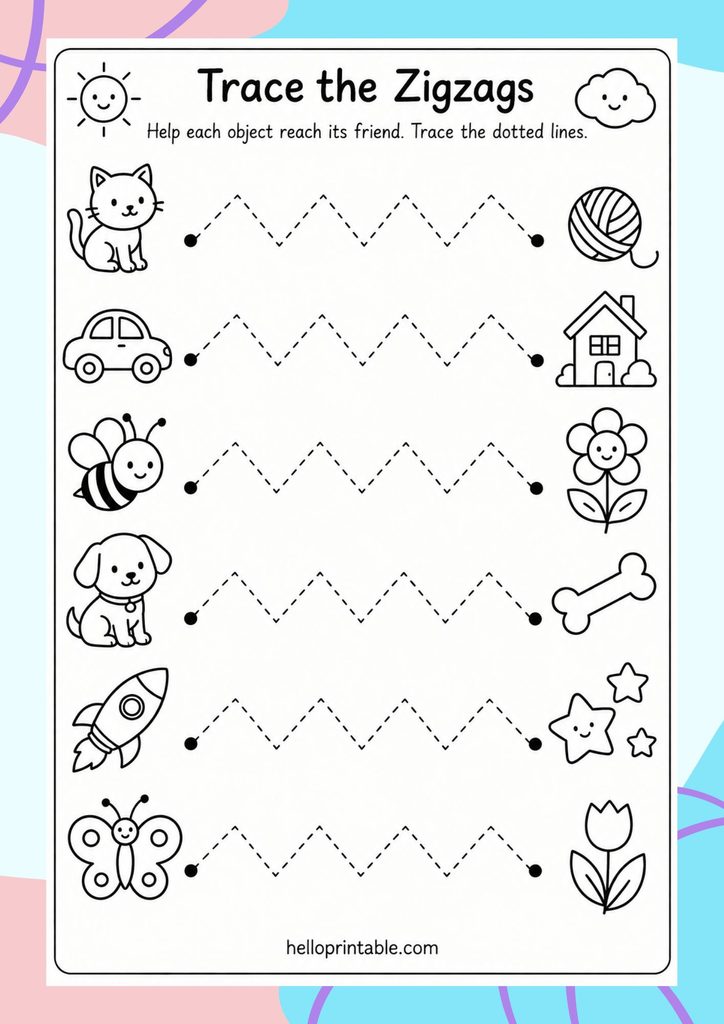
5. Zigzag Tracing
Zigzag lines introduce repeated changes in direction.
Children need to guide their pencil upward, reach the corner, and then change direction. This makes zigzag tracing worksheets a useful next step after straight-line practice.
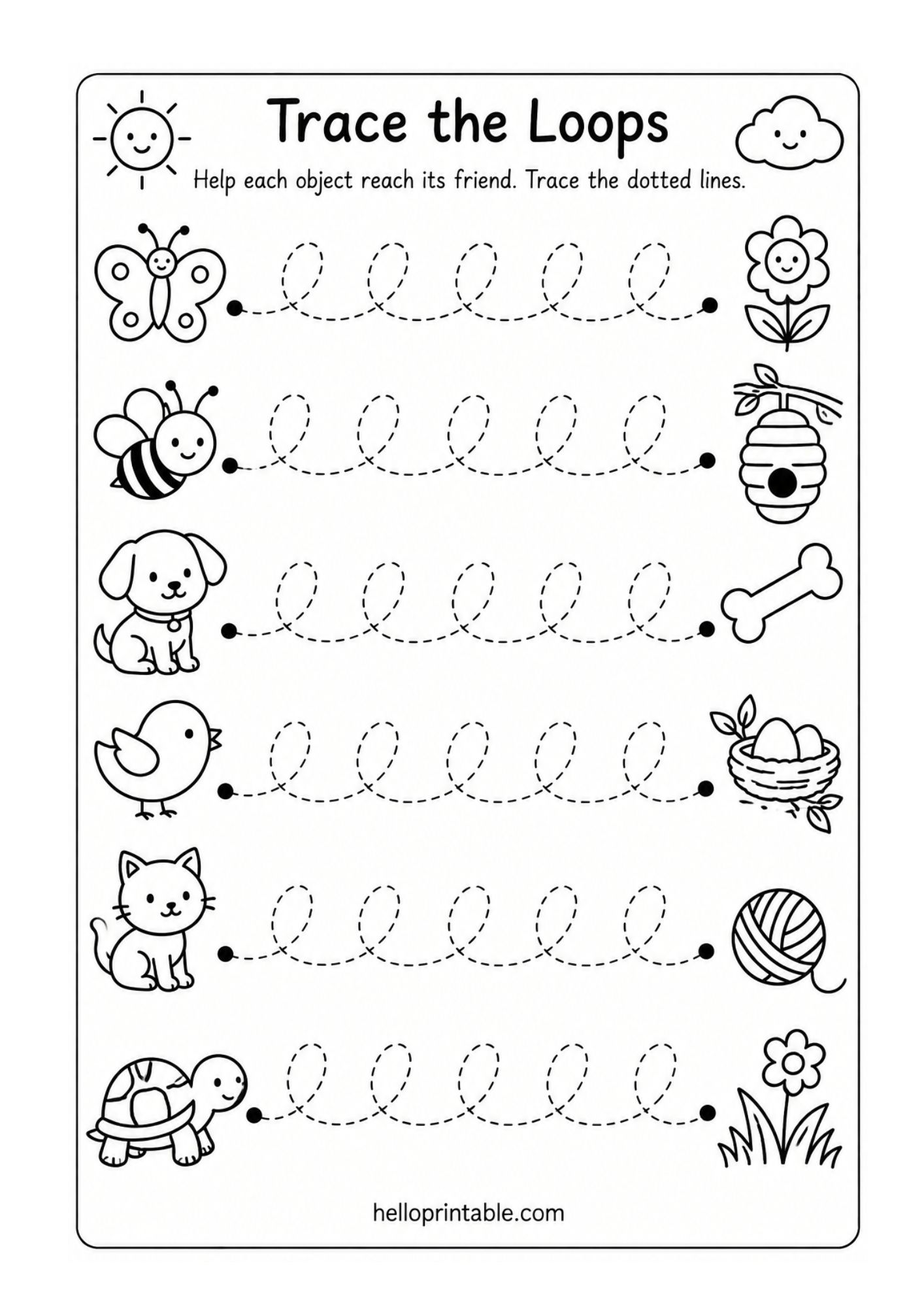
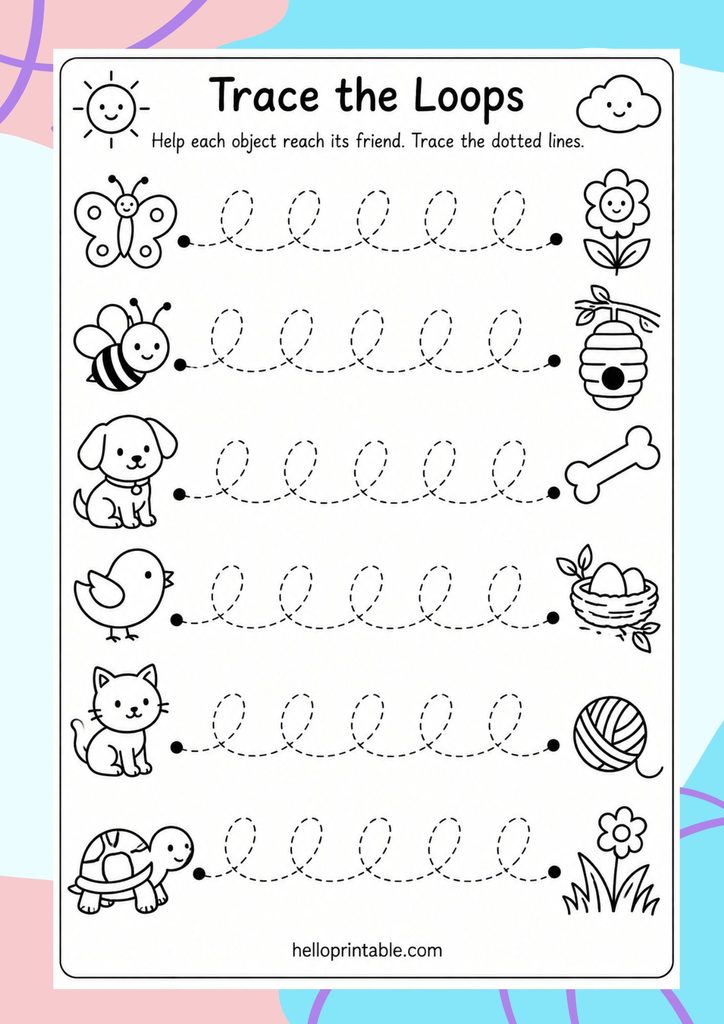
6. Loop Tracing
Loops are especially useful for practicing continuous pencil movement.
Instead of stopping after every stroke, children follow one flowing path through a series of large loops. This provides early practice with some of the rounded movements they’ll encounter later in handwriting.
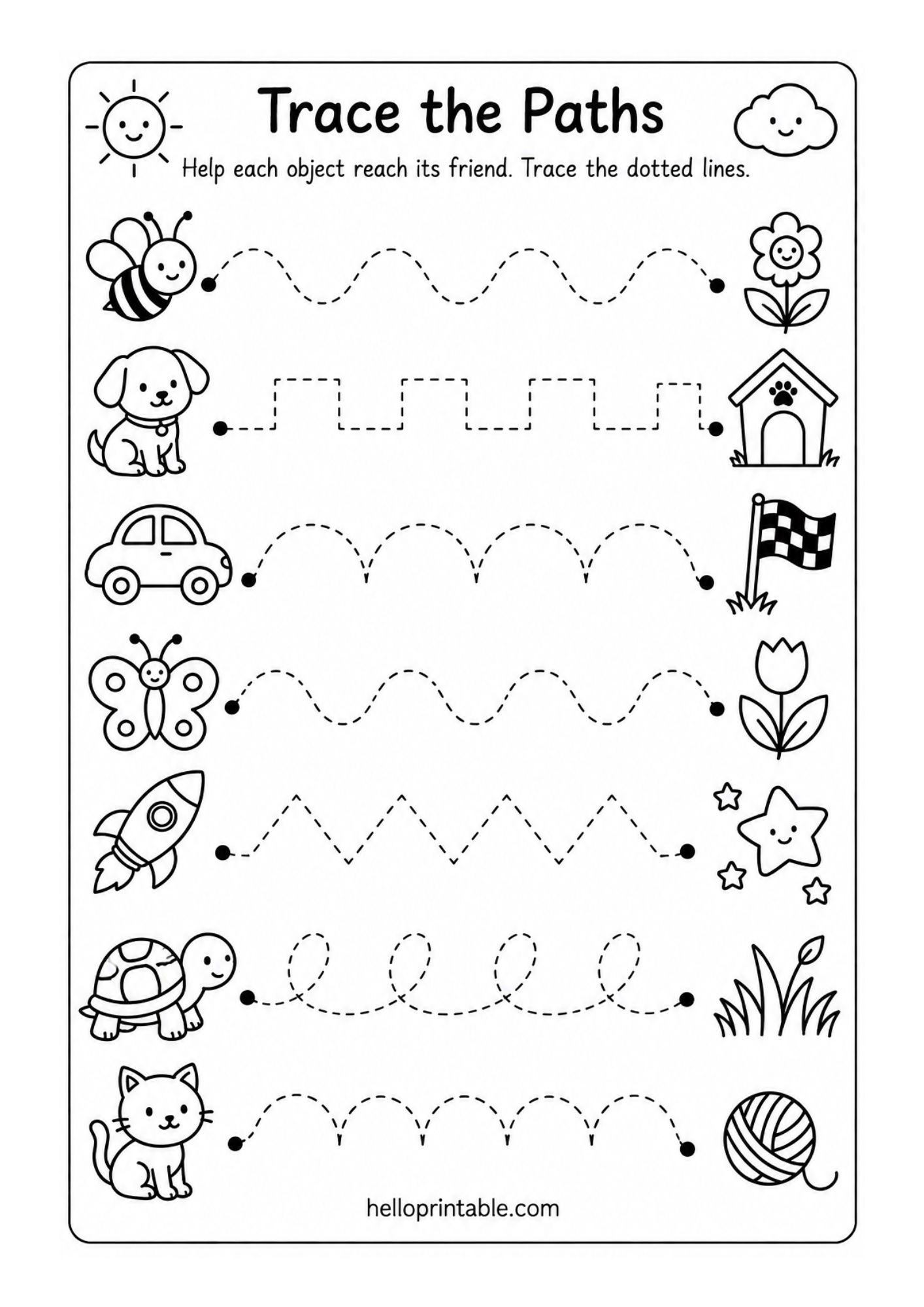
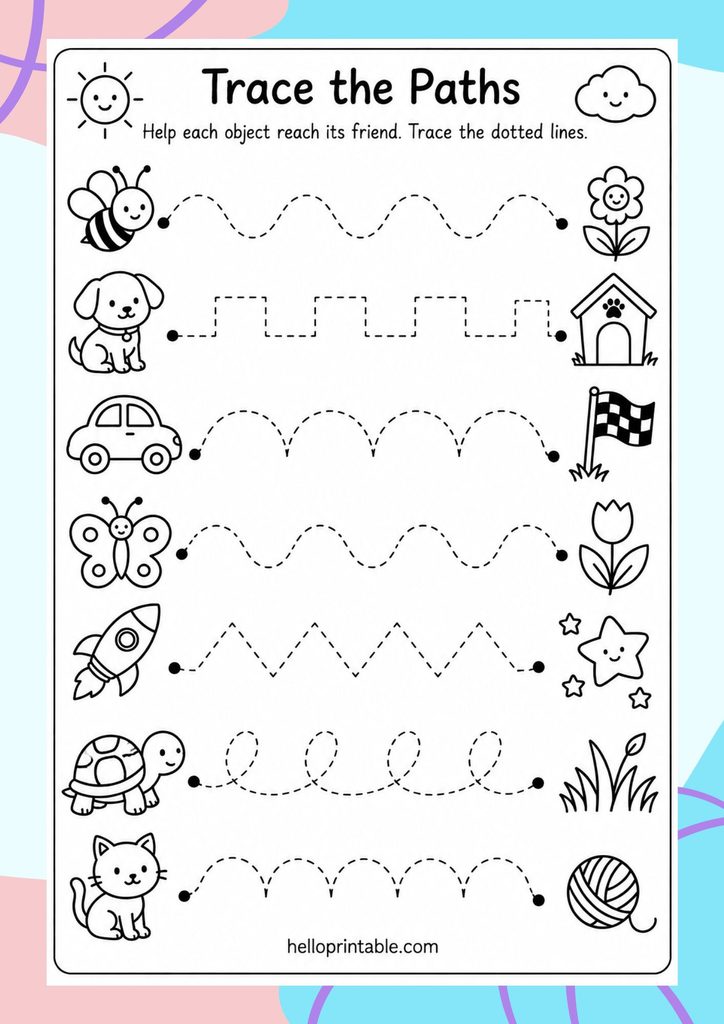
7. Mixed Pencil-Control Paths
The final activities bring several movements together.
Children may encounter waves, loops, steps, arches, or zigzags on the same page. These pencil control worksheets provide extra practice once the simpler paths become familiar.
Designed Especially for Little Hands
Toddler worksheets work best when they aren’t overcrowded.
That’s why these printable tracing pages use large pictures, spacious paths, clear dotted lines, and simple black-and-white designs.
There aren’t dozens of tiny tracing exercises squeezed onto each page. Children get enough room to concentrate on moving their pencil along one path at a time.
The black-and-white format also makes the worksheets easy to print at home or in the classroom—and children can color the pictures afterward for an extra activity.
Turn Pencil Practice Into a Little Game
One thing you’ll notice about these worksheets is that the lines aren’t floating randomly around the page.
Each path connects two pictures.
A bee needs to reach its flower.
A puppy wants its bone.
A butterfly is flying toward a flower.
A rocket is heading toward the stars.
These little visual prompts give children a reason to follow the line.
Instead of simply saying, “Trace this zigzag,” you can say:
“Can you help the puppy get to his bone without leaving the path?”
That tiny change can make pencil practice much more engaging for a toddler.
What Age Are These Tracing Worksheets For?
These worksheets are designed primarily for toddlers, preschoolers, and other early learners who are beginning to use crayons or pencils.
There isn’t one exact age when every child should begin tracing. Fine motor development varies considerably from child to child.
Some younger children may simply enjoy following the paths with their fingers. Others may be ready to trace using a chunky crayon. Preschoolers with more developed pencil control may be able to follow the dotted paths more precisely.
The goal isn’t perfect tracing.
It’s practice.
How to Use These Pre-Writing Worksheets
Start with whichever tool your child can comfortably control. For some toddlers, a thick crayon can be easier to handle than a standard pencil.
Let them trace slowly, and don’t worry if they move outside the dotted path.
As their control improves, they can repeat the same worksheets and try staying closer to the lines.
You can also place the printed pages inside a reusable dry-erase pocket or laminate them. Children can then practice the same paths several times with a dry-erase marker.
Another easy idea is to trace the path with a finger first. Ask your child to follow the dotted line from the starting picture to the destination before trying it with a pencil or crayon.
Skills Children Can Practice With Line Tracing
Although these pages look simple, they give young learners opportunities to practice several early skills at once.
Tracing can support practice with hand-eye coordination, visual tracking, controlled hand movements, direction changes, and early pencil control.
Most importantly, these activities give children experience using a writing tool before formal handwriting becomes the focus.
Think of them as a bridge between scribbling and writing.
A Simple Pre-Writing Routine
You don’t need to complete the entire pack at once.
For a young child, even one worksheet can provide plenty of practice for a session.
You might begin with straight-line tracing and repeat those pages until your child is comfortable. Then introduce diagonal or curved paths. Zigzags, waves, and loops can come afterward.
Keep sessions short and relaxed.
Five enjoyable minutes of pencil practice can be much more useful than pushing a tired toddler through several pages.
And if your child wants to color the pictures instead of tracing that day? That’s fine too. They’re still using their hands and practicing control.
Download the Free Printable Tracing Worksheets
Ready for some pencil practice?
Download this free printable tracing worksheets pack for toddlers and preschoolers and choose a page that matches your child’s current skill level.
Start with the easiest straight lines, move on to curves and zigzags, and eventually try the mixed tracing paths.
Print as many pages as you need for home, preschool, daycare, or classroom practice.
Happy tracing!