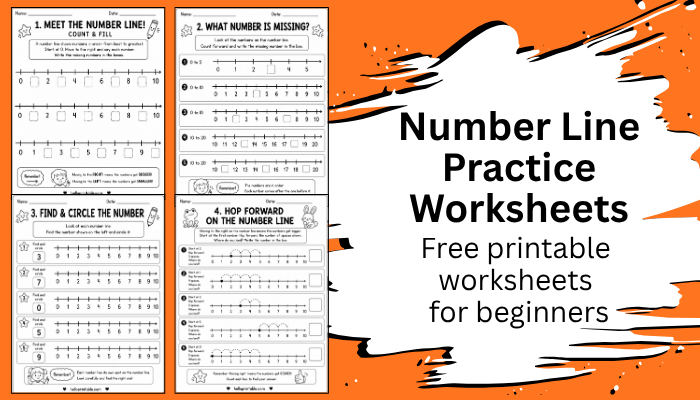
Learning numbers becomes much easier when children can actually see how numbers relate to one another. That’s exactly what a number line helps young learners do. Our collection of free printable number line worksheets is designed for Kindergarten, 1st Grade, and 2nd Grade students who are just beginning to understand number lines.
Instead of jumping straight into difficult addition and subtraction problems, these beginner-friendly worksheets introduce number lines step by step. Children first learn where numbers belong, then practice finding missing numbers, locating numbers, hopping forward, and finally hopping backward.
Whether you’re a teacher, homeschool parent, tutor, or parent looking for extra math practice, these printable activities provide a simple and visual introduction to number lines.
What Is a Number Line?
A number line is a straight line that shows numbers in order.
For example:
0 — 1 — 2 — 3 — 4 — 5
Numbers get bigger as we move to the right and smaller as we move to the left.
This simple visual tool helps children understand number order and eventually introduces them to important math concepts such as addition and subtraction.
For a young learner, seeing numbers arranged visually can make these relationships much easier to understand.
What’s Included in These Printable Number Line Worksheets?
This collection contains 5 beginner number line worksheets.
The worksheets have been arranged in a gradual learning sequence so children can develop confidence before moving on to the next skill.
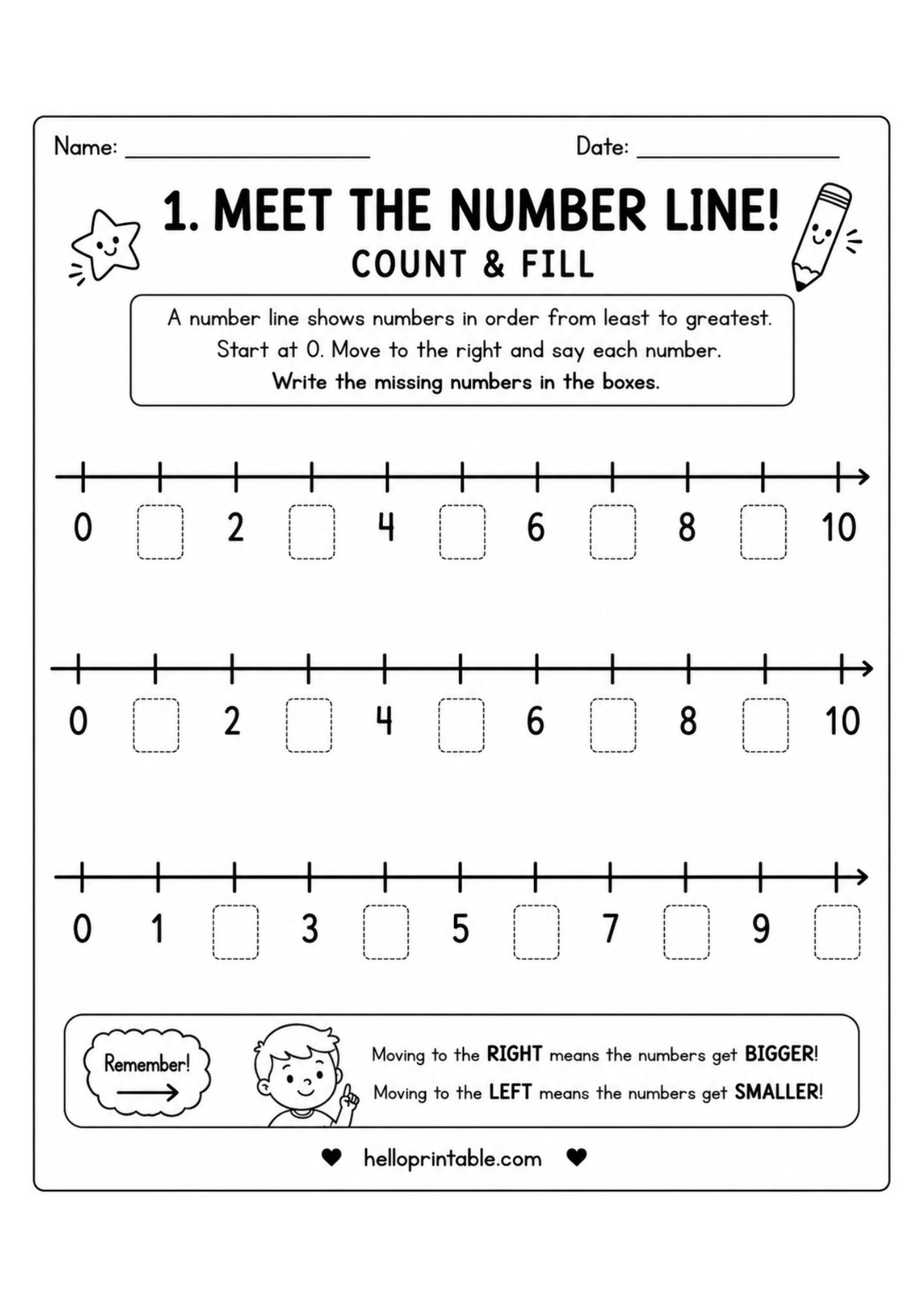
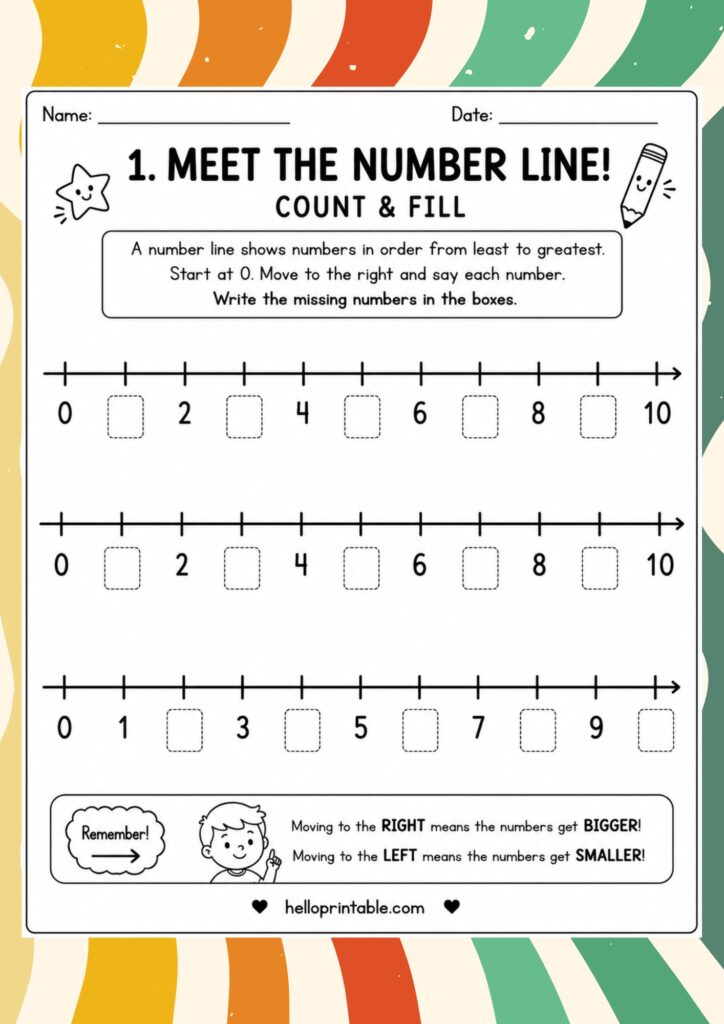
1. Meet the Number Line – Count & Fill
The first worksheet provides a gentle introduction to number lines.
Children see numbers arranged from 0 to 10 and practice filling in the missing numbers.
The worksheet also introduces one of the most important number line rules:
Move right → numbers get bigger.
Move left → numbers get smaller.
Students practice counting forward while observing where each number belongs.
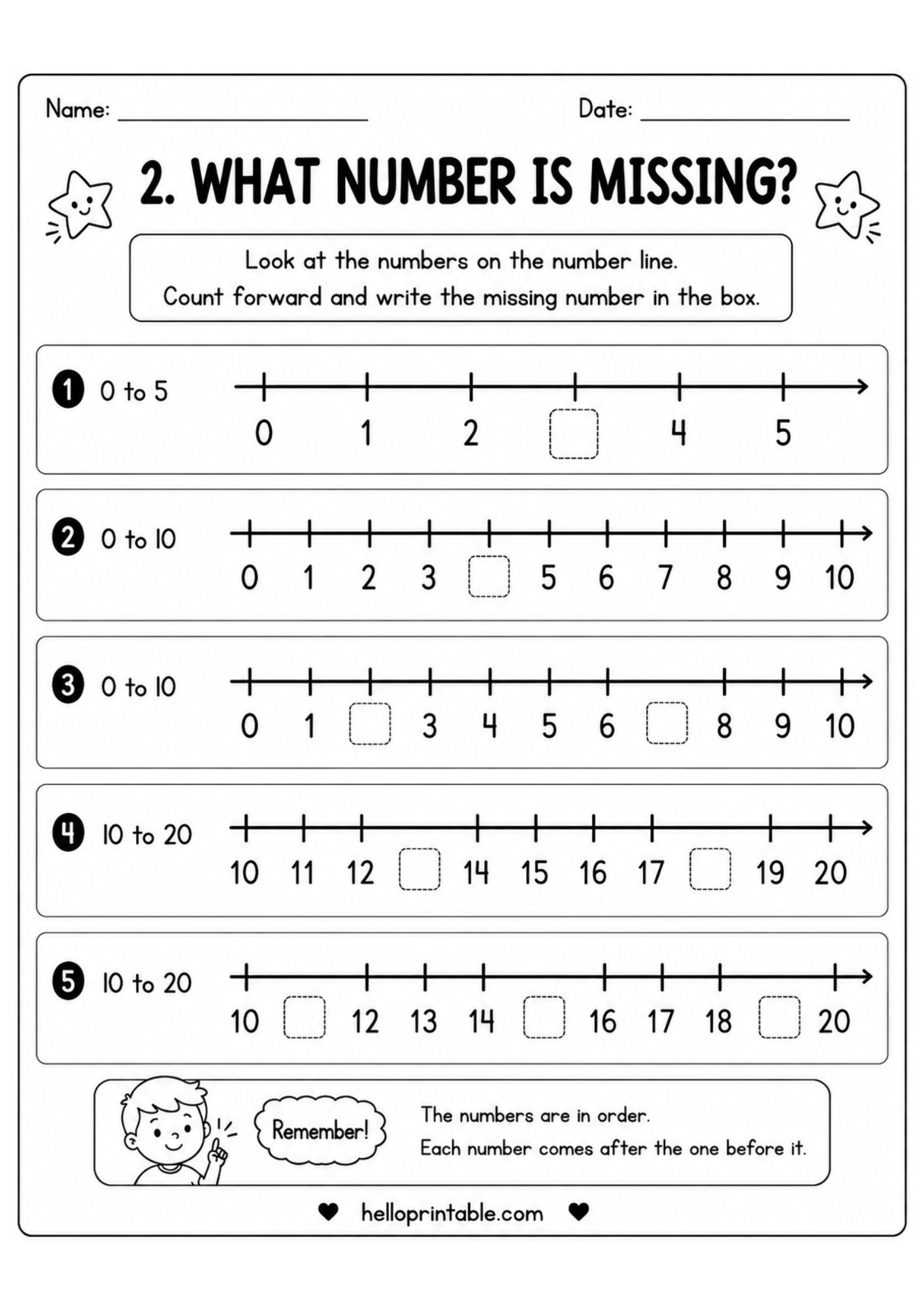
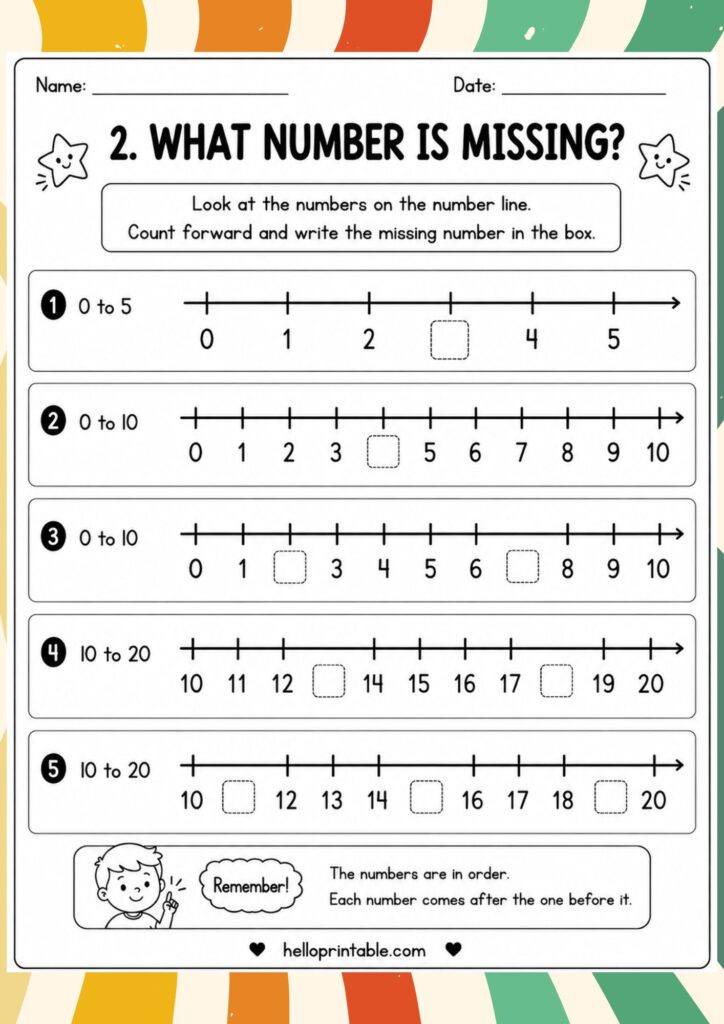
2. What Number Is Missing?
Once children understand the basic layout of a number line, they can begin identifying missing numbers.
In this worksheet, students look at several number lines and determine which numbers belong in the empty spaces.
Some activities use numbers from 0 to 10, while others introduce numbers from 10 to 20.
Children are encouraged to count forward to determine the missing number.
For example:
0 — 1 — 2 — ___ — 4 — 5
The missing number is 3.
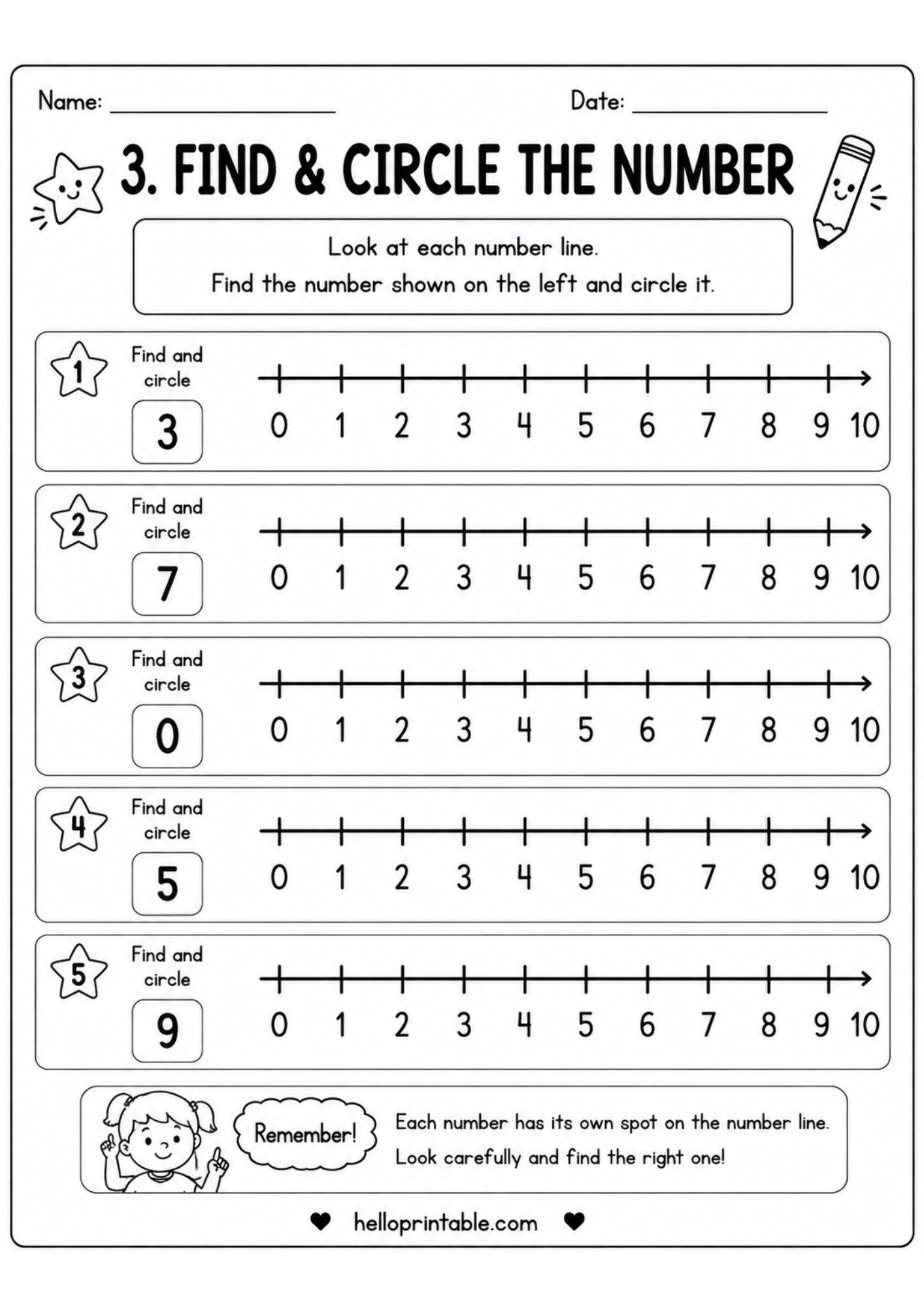
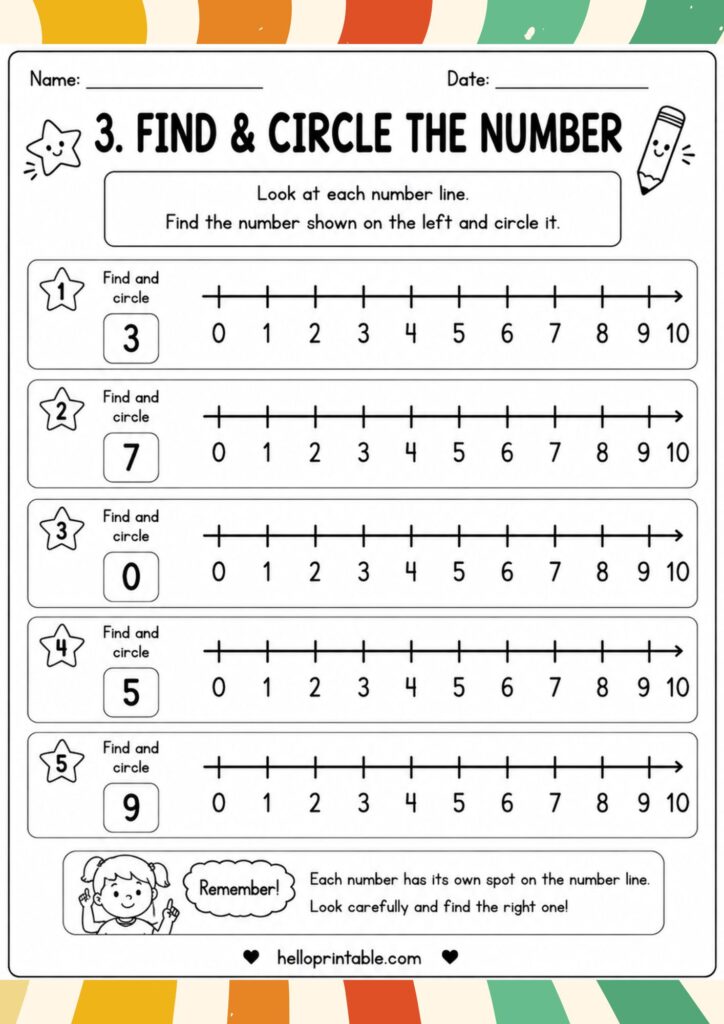
3. Find & Circle the Number
Knowing that numbers appear in order is only part of understanding a number line.
Children also need to recognize that every number has its own position.
In our Find & Circle the Number worksheet, students are given a target number and asked to locate it on a number line.
For example:
Find and circle 7.
The child looks across the number line, finds 7, and circles it.
This simple activity helps young learners become comfortable reading number lines independently.
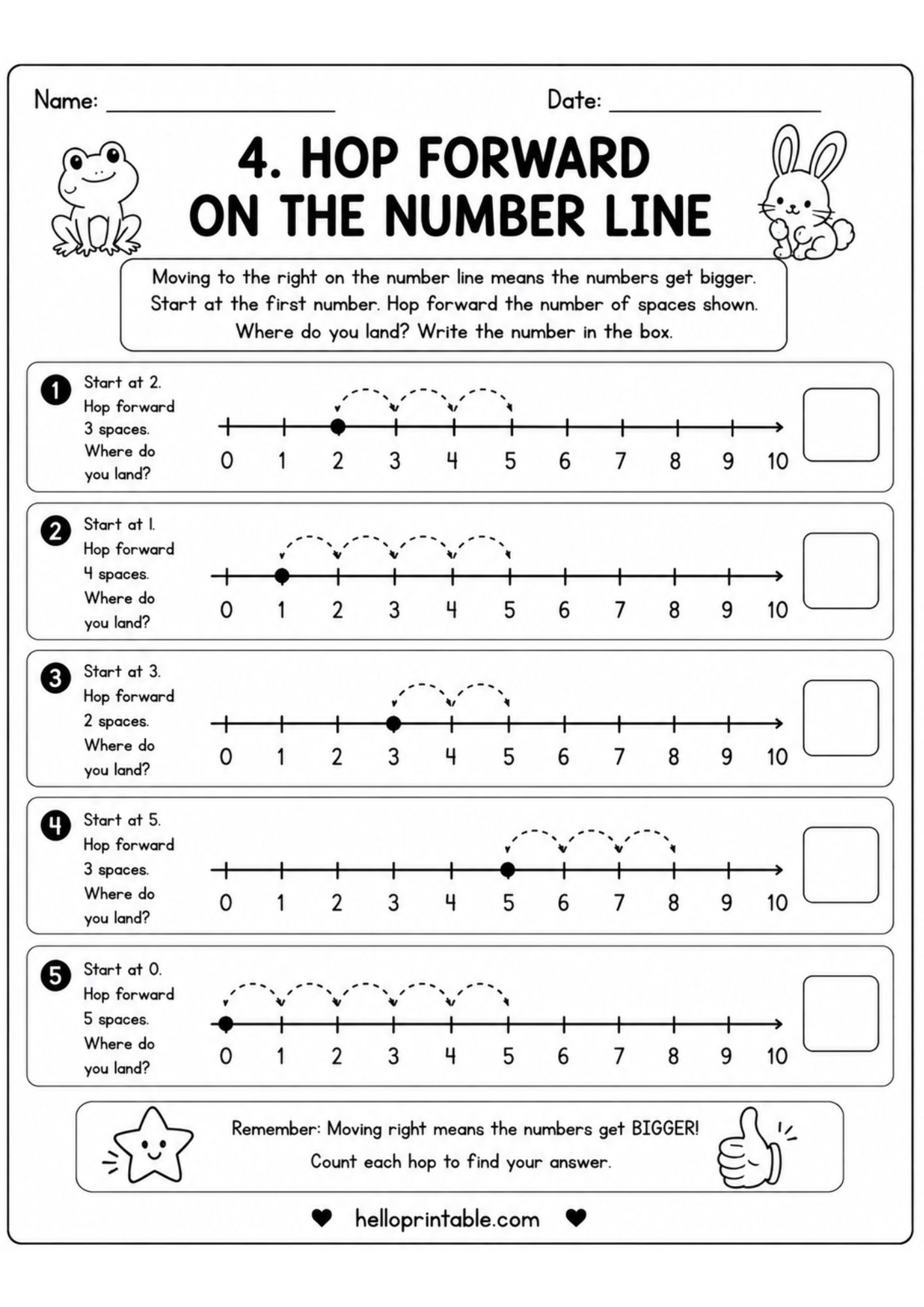
4. Hop Forward on the Number Line
Now the fun begins!
Once children understand where numbers are located, they can learn how to move along a number line.
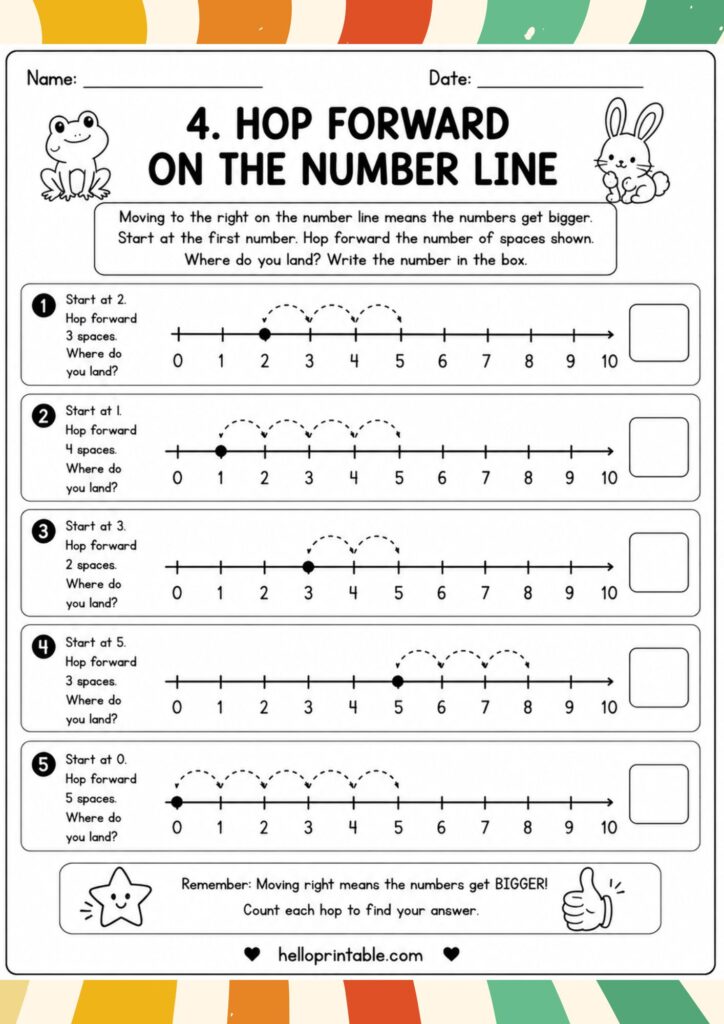
The Hop Forward on the Number Line worksheet provides a visual introduction to addition.
Children begin at a starting number and make a given number of hops toward the right.
For example:
Start at 2.
Hop forward 3 spaces.
The child follows:
2 → 3 → 4 → 5
They land on 5.
This visually demonstrates the idea behind:
2 + 3 = 5
without requiring beginners to immediately focus on formal equations.
Why hopping forward is helpful?
Moving along the number line allows children to see that adding means moving toward larger numbers.
Instead of simply memorizing that 2 + 3 = 5, children can see why the answer is 5.
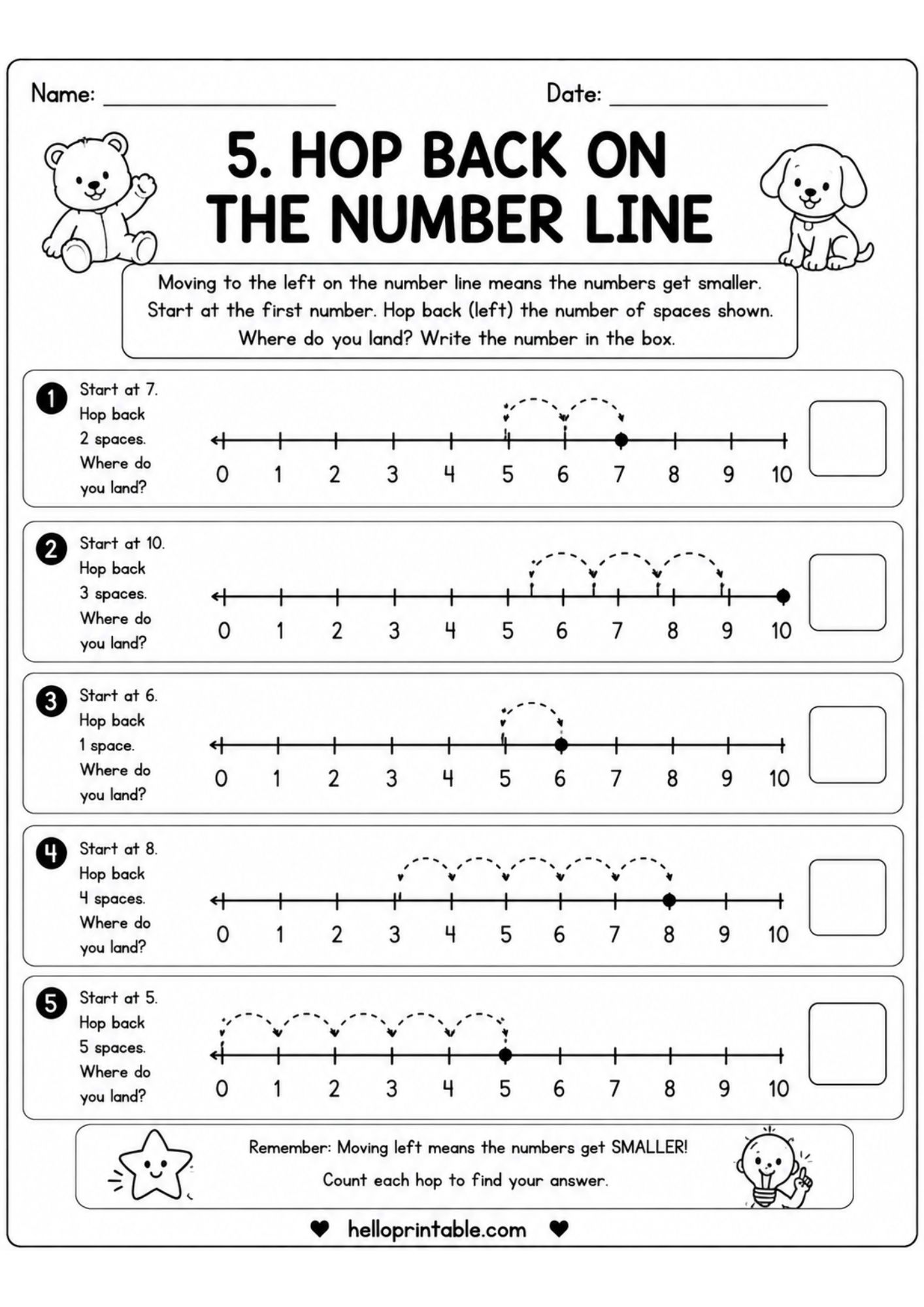
5. Hop Back on the Number Line
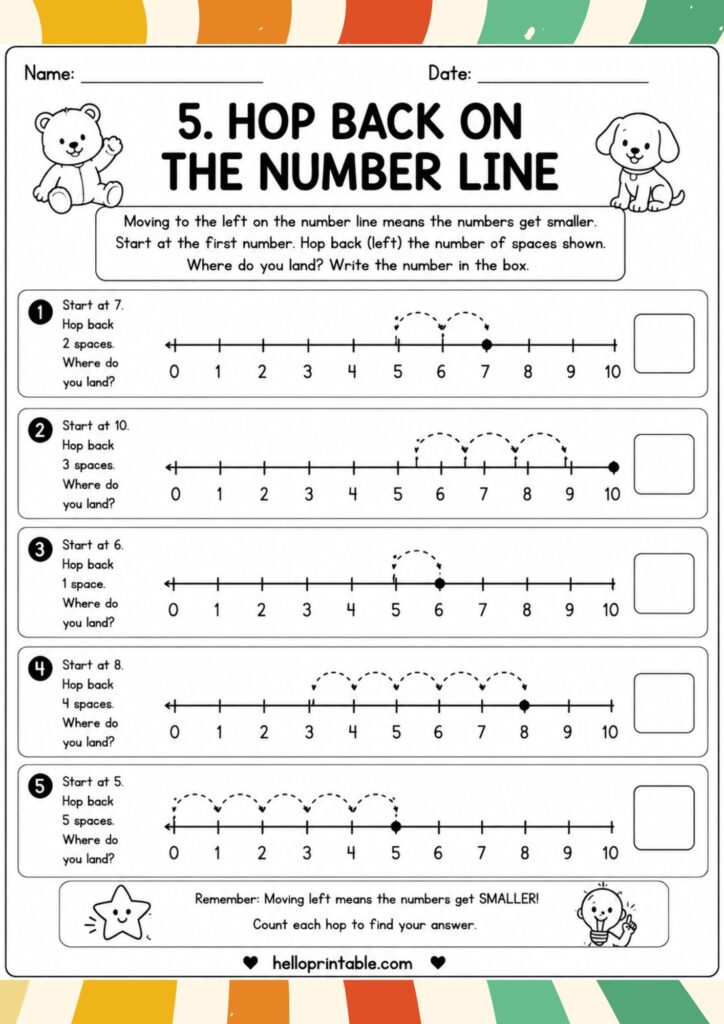
The final worksheet introduces children to moving in the opposite direction.
Students begin at a number and hop backward toward the left.
For example:
Start at 7.
Hop back 2 spaces.
The child follows:
7 → 6 → 5
They land on 5.
This provides a visual introduction to:
7 − 2 = 5
Children begin to understand that moving left on a number line leads to smaller numbers.
Why Are Number Lines Important for Early Learners?
Number lines provide children with a visual representation of numbers and their relationships.
When a child sees:
1 — 2 — 3 — 4 — 5
they can physically observe that 5 comes after 4 and that 2 comes before 3.
As their math skills develop, the same tool can help them understand addition, subtraction, skip counting, comparing numbers, and other mathematical concepts.
That makes number-line practice an important part of building strong early number sense.