Once children become comfortable tracing straight lines, curves, waves, and simple zigzags, they’re usually ready for something a little more challenging.
That’s where these free printable pencil control worksheets come in.
This advanced tracing pack moves beyond basic line practice and gives young learners more interesting paths, spirals, shapes, and complete pictures to trace. Children can follow winding paths, work their way around large spirals, and even trace familiar objects such as a flower, house, and dinosaur.
The goal is simple: give little hands more opportunities to practice controlled pencil movements before formal handwriting becomes the focus.
And because the worksheets feel more like pictures and activities than handwriting drills, children can have fun while they practice.
Free Printable Advanced Tracing Worksheets
If your child can already comfortably trace basic straight and curved lines, these advanced tracing worksheets are a natural next step.
Instead of practicing the same movement repeatedly, children encounter paths that require them to:
- Change pencil direction
- Follow tighter curves
- Move continuously around circles and spirals
- Combine straight and curved strokes
- Trace around larger objects
- Navigate more detailed outlines
- Maintain control over longer tracing paths
These movements provide a greater challenge without immediately jumping into letter or number formation.
What’s Included in This Advanced Tracing Pack?
We created this collection with a variety of tracing activities rather than filling every page with identical rows of patterns.
Some worksheets focus on following a path. Others encourage children to trace an entire picture.
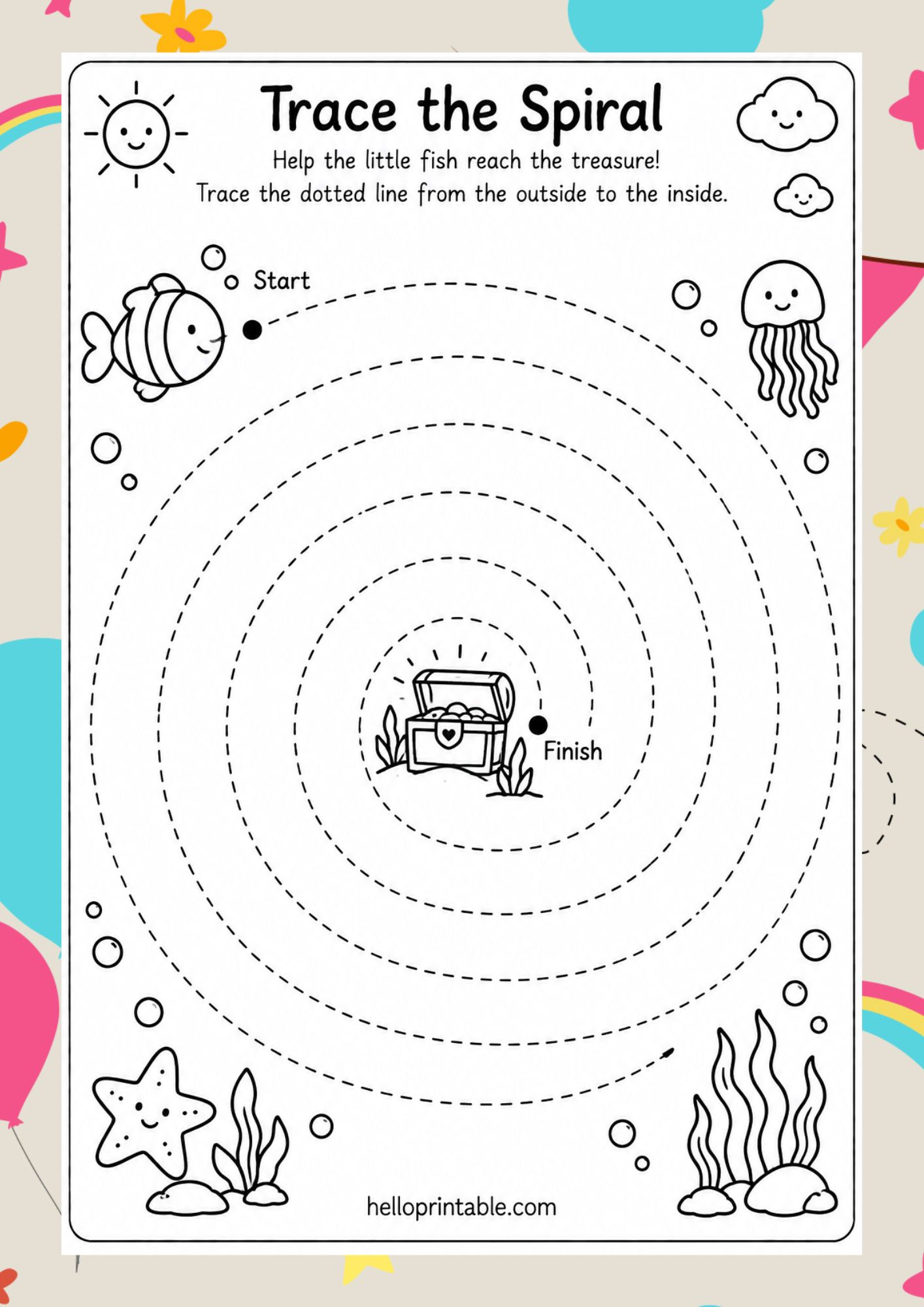
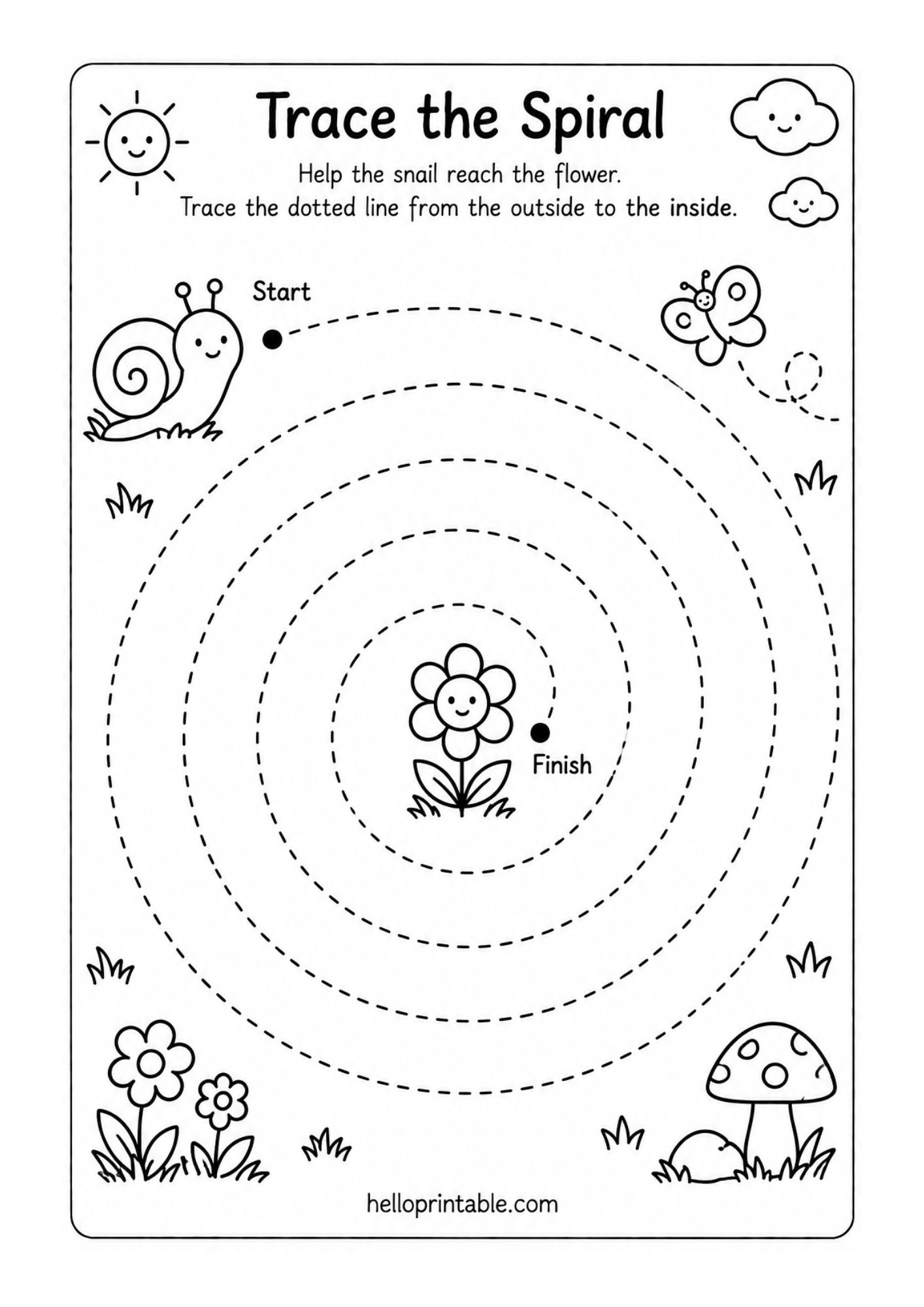
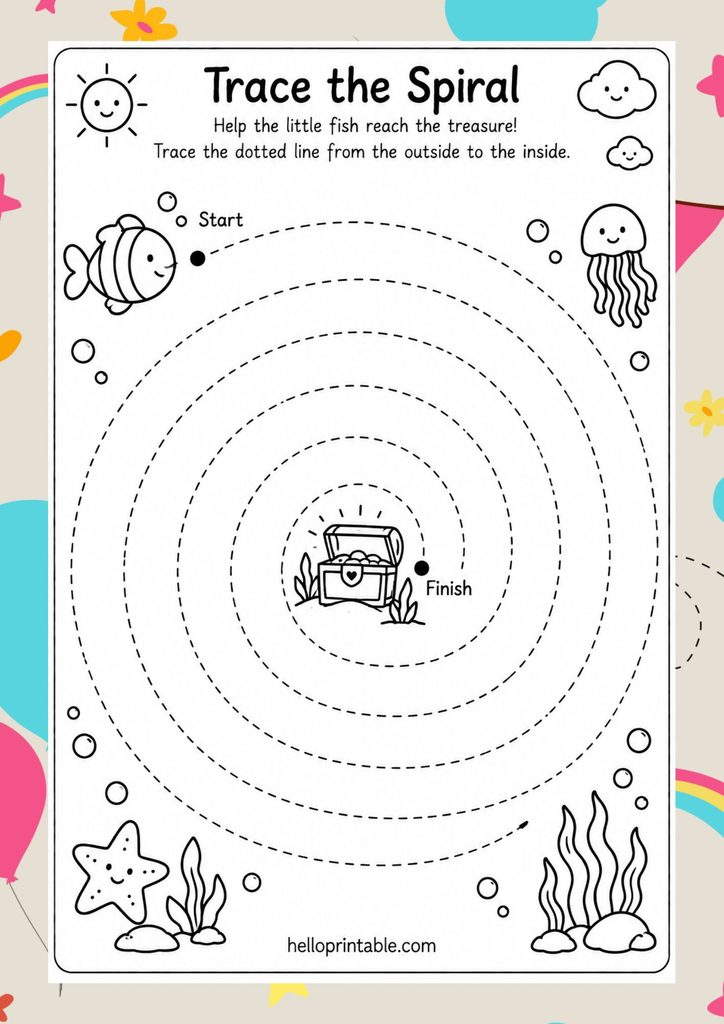
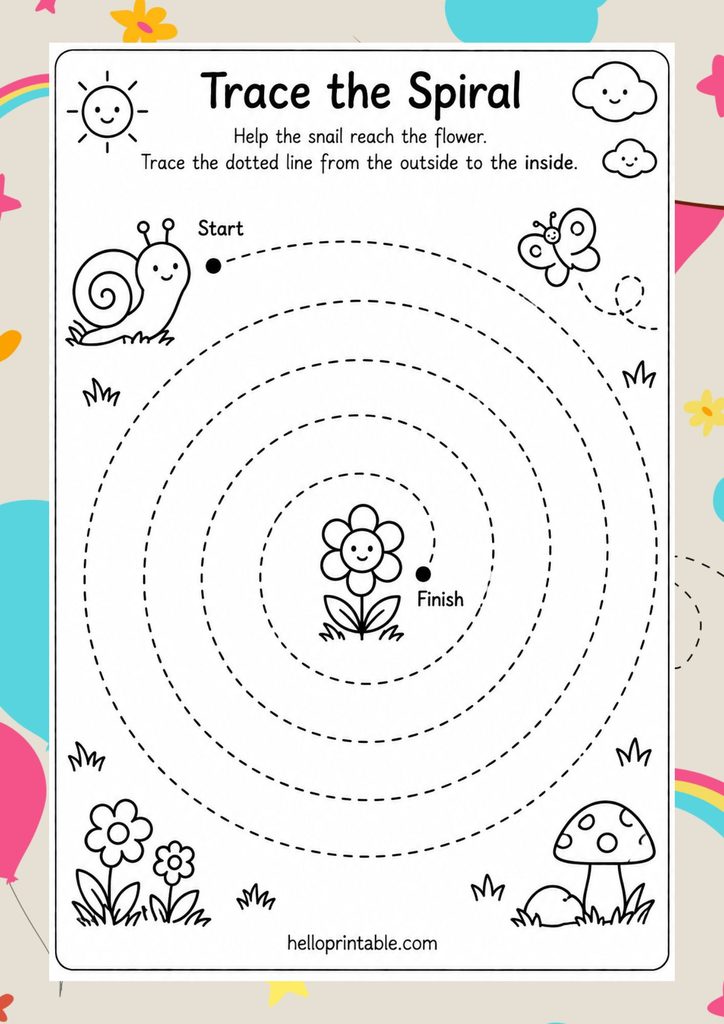
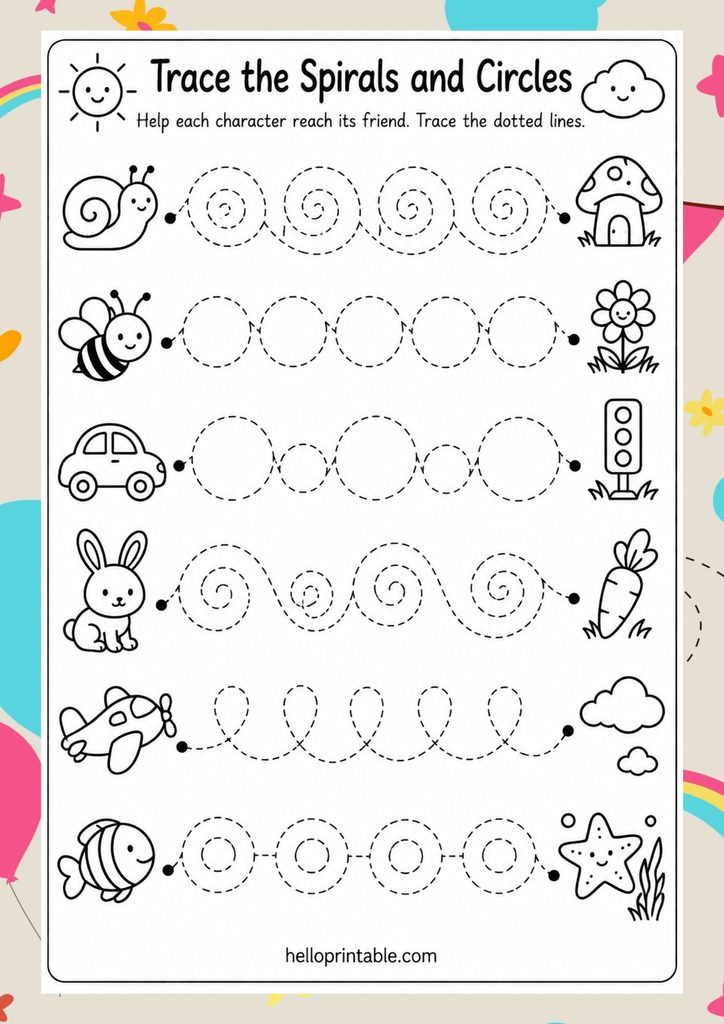
Spiral Tracing Worksheets
Spirals are a fun step up from basic curved-line practice.
Children have to maintain a continuous pencil movement while gradually changing the size and direction of the curve.
Our spiral activities turn this into a game.
Instead of tracing an isolated spiral, children might help a character travel from the outside of a large spiral toward an object waiting in the center.
This adds a visual goal to the activity while giving children plenty of continuous pencil-control practice.
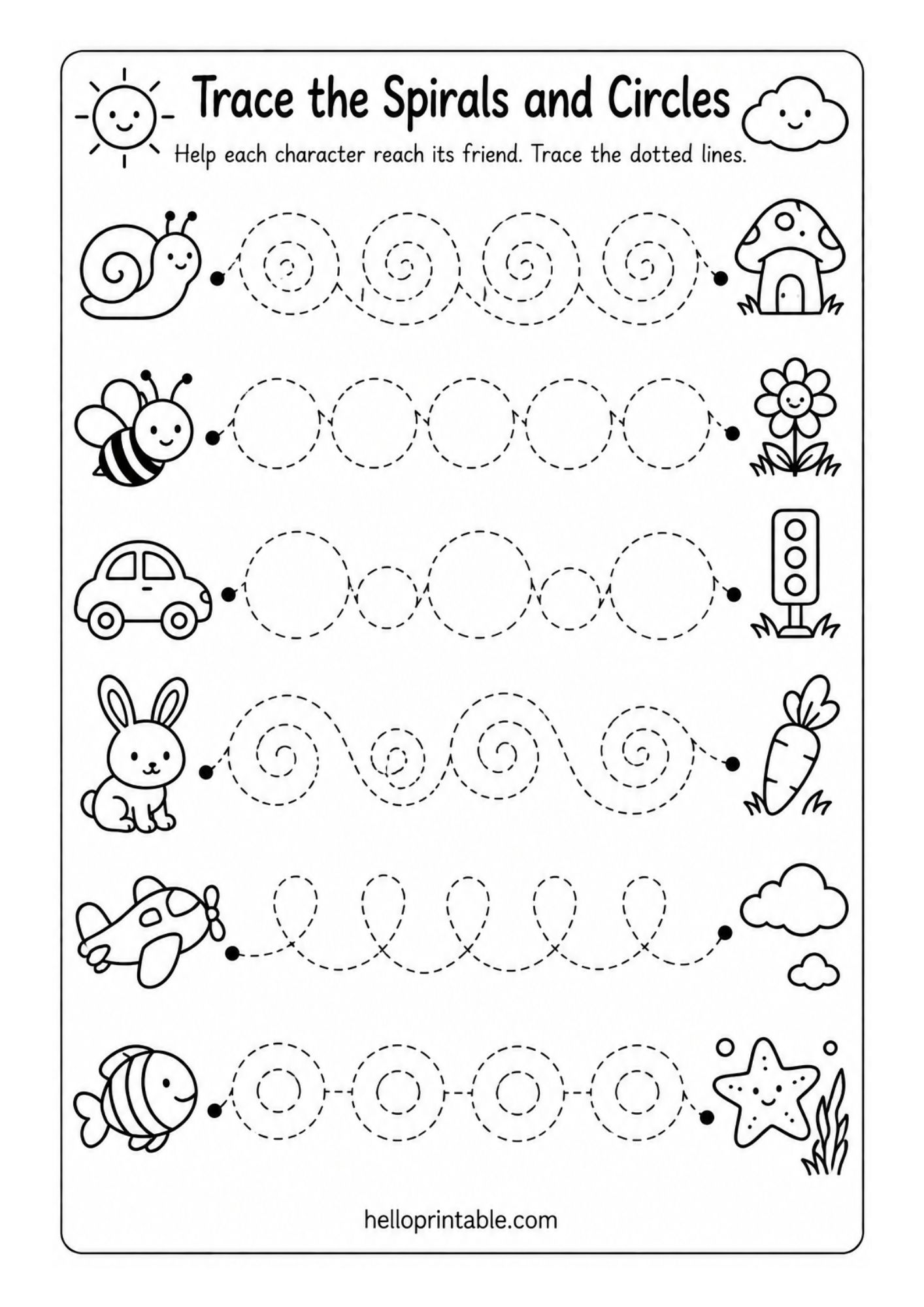
Circle and Rounded Movement Practice
Circular movements appear frequently in early handwriting and drawing.
After mastering simple curves, children can practice following larger circular paths and rounded shapes.
These activities encourage smoother hand movements rather than the stop-and-start motion used for straight or zigzag lines.
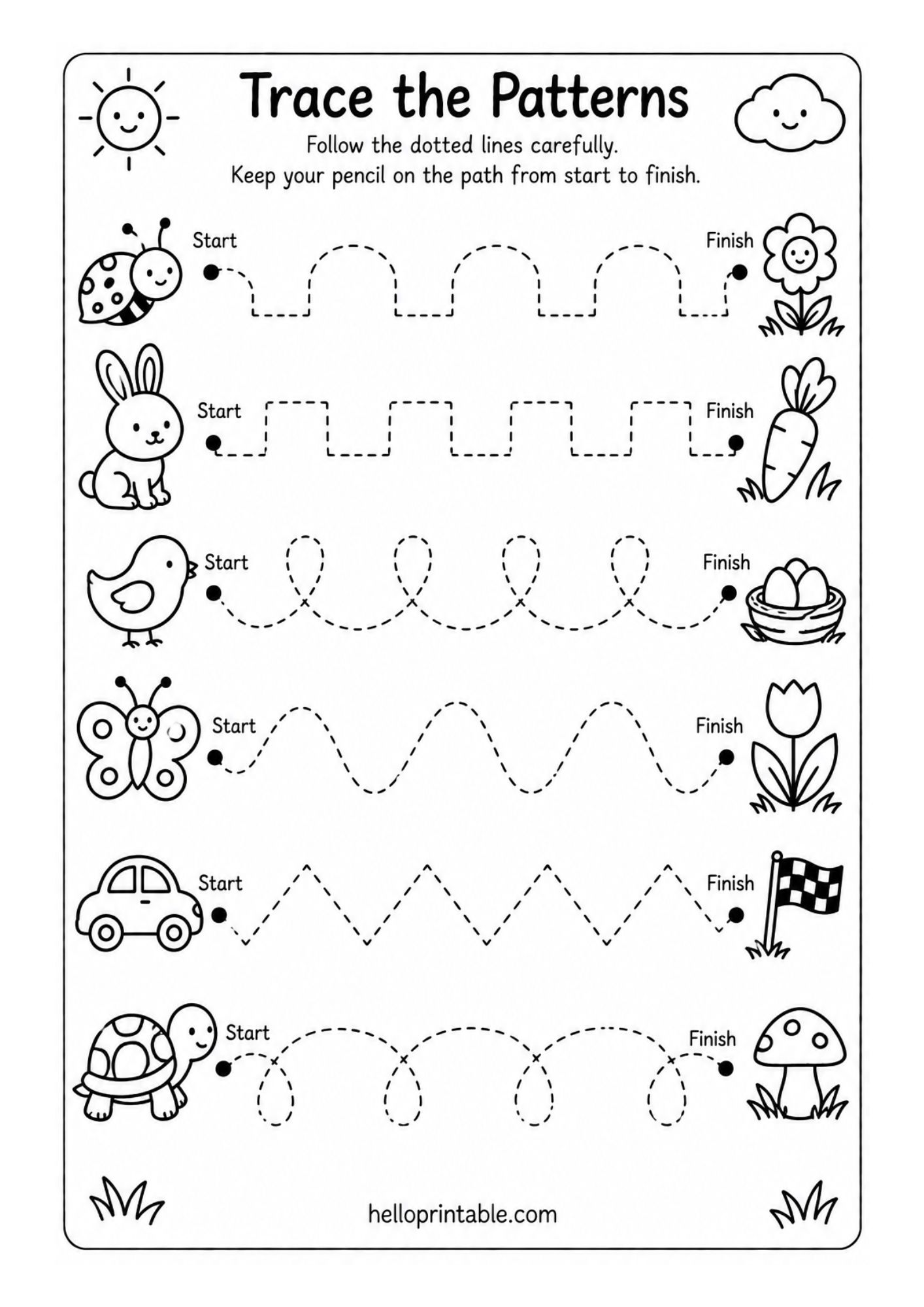
Mixed Pattern Tracing
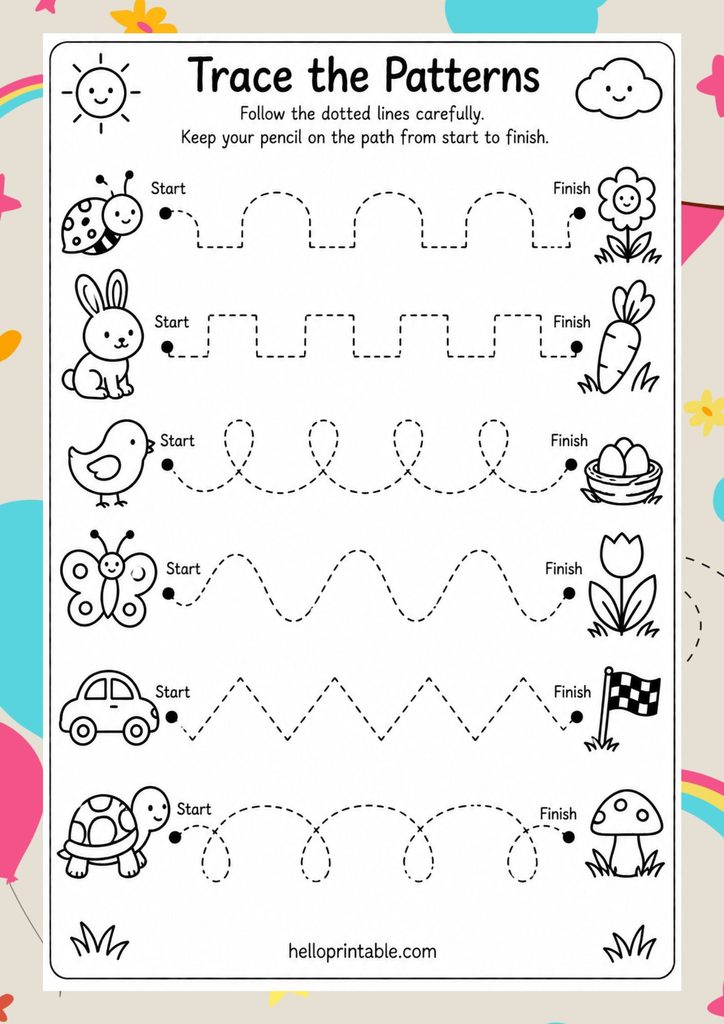
Some of the worksheets combine several types of movements on one page.
Children may encounter:
arches → square turns → loops → waves → zigzags → rounded curves
Switching between these movements can make the activity more challenging than repeating one identical line throughout the worksheet.
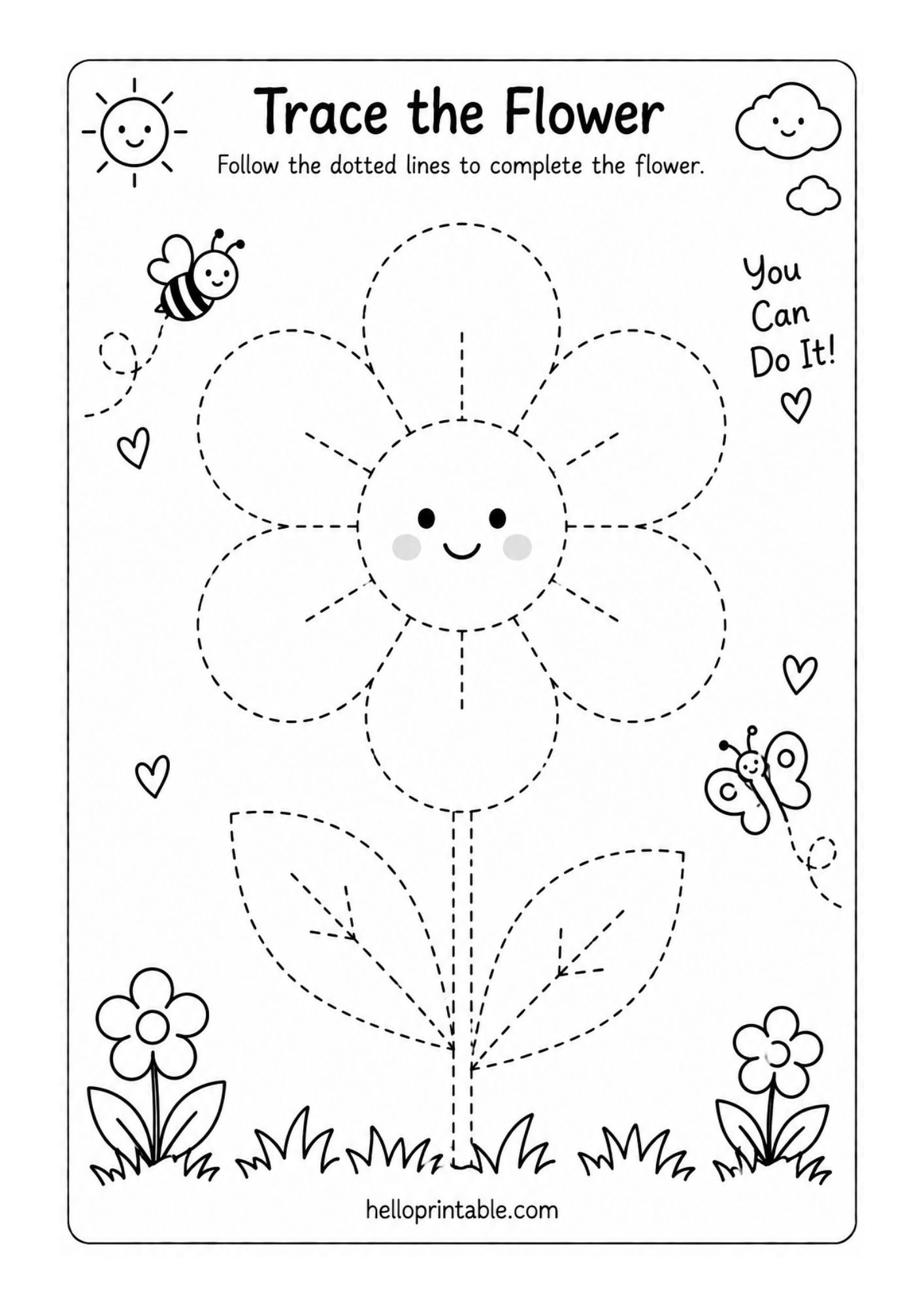
Trace the Flower Worksheet
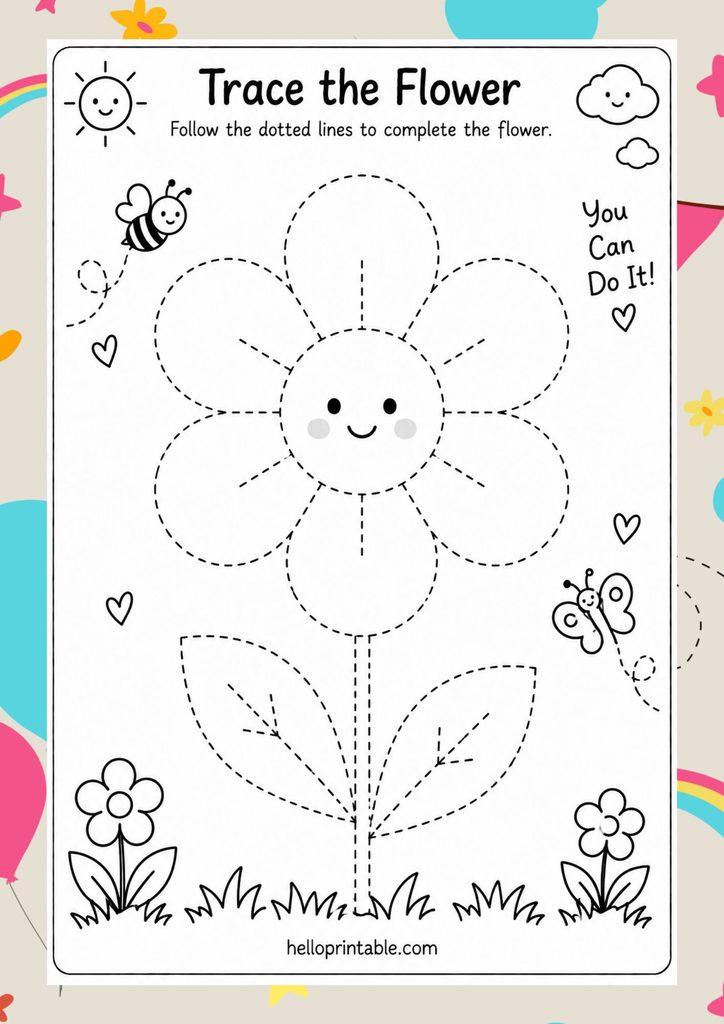
One of our picture-based activities features a large flower made from traceable lines.
Children can trace around the petals, circular center, stem, and leaves to complete the picture.
This type of activity introduces an important transition.
Rather than simply following a line from point A to point B, children begin using tracing movements to construct a recognizable object.
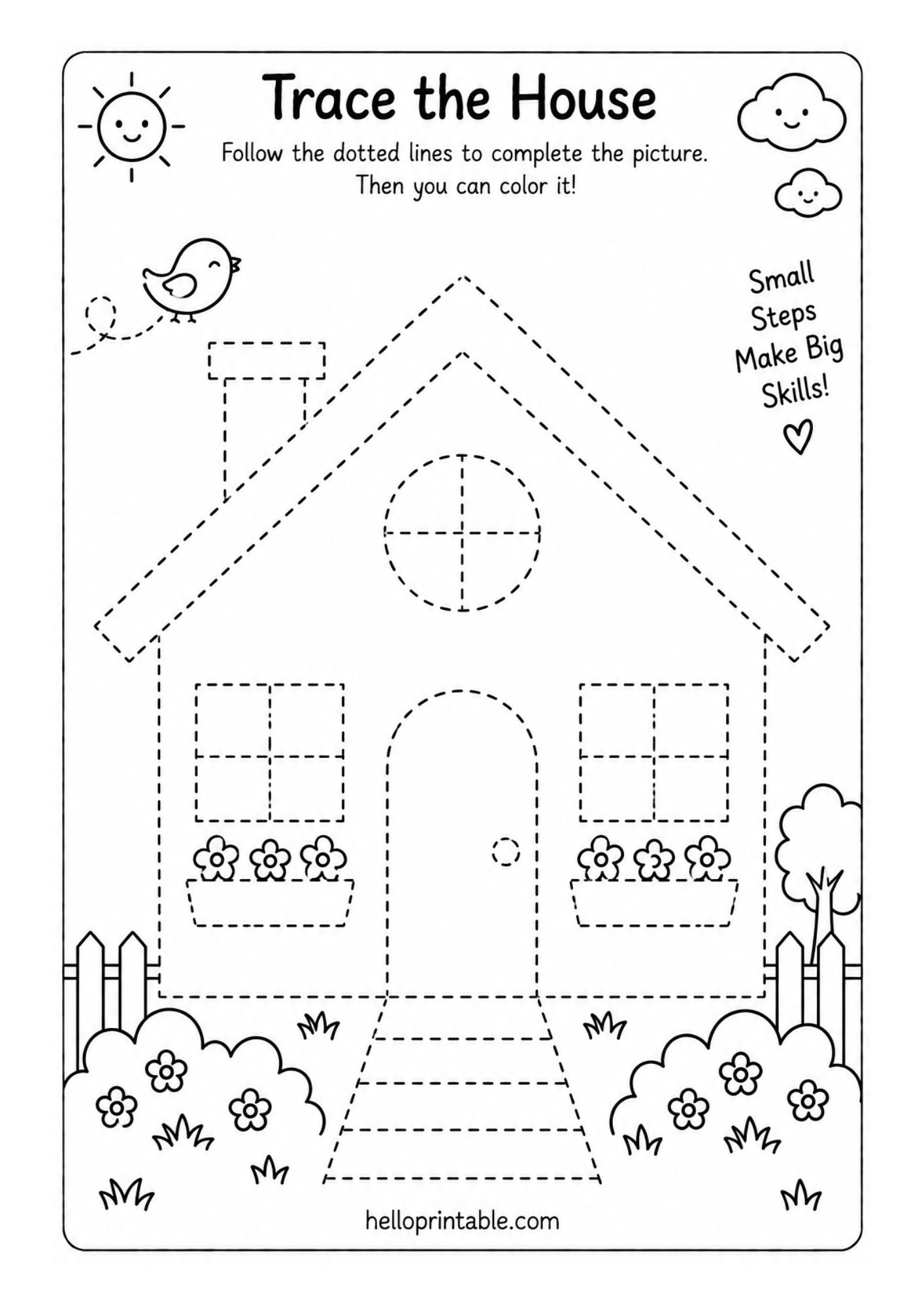
Trace the House Worksheet
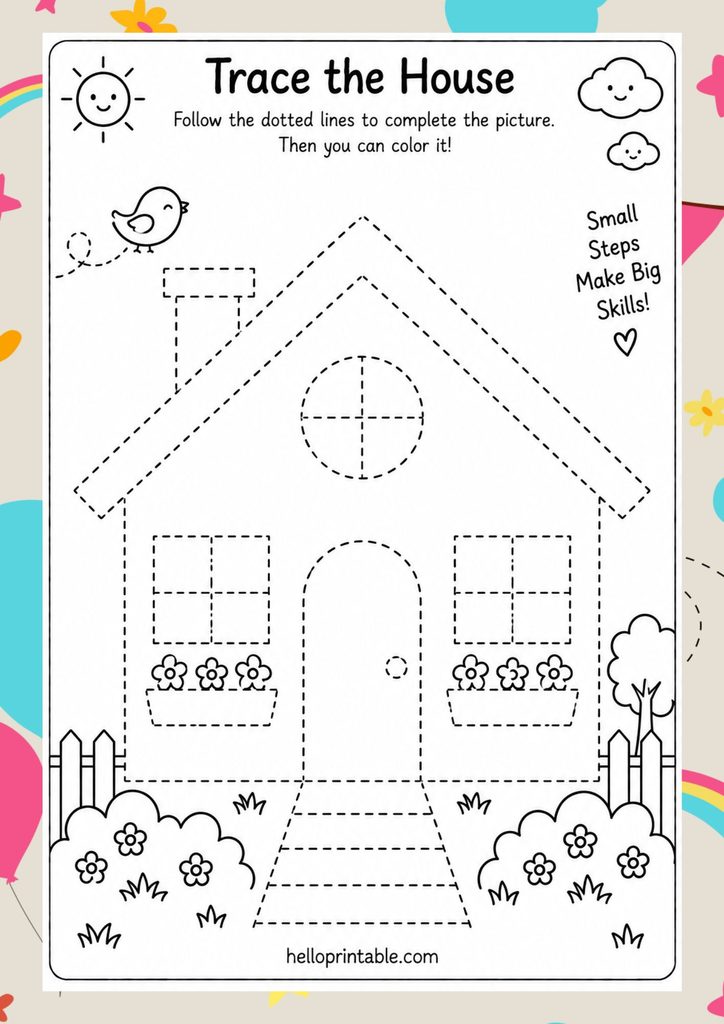
The house tracing worksheet introduces a mixture of straight and curved movements.
Children can trace the roof, walls, windows, door, chimney, and other parts of the picture.
A house is especially useful for this type of activity because its structure naturally combines many of the movements children have already practiced:
straight vertical lines, horizontal lines, diagonal roof lines, squares, rectangles, and rounded shapes.
Instead of practicing those strokes separately, children get to see how they work together to create a complete picture.
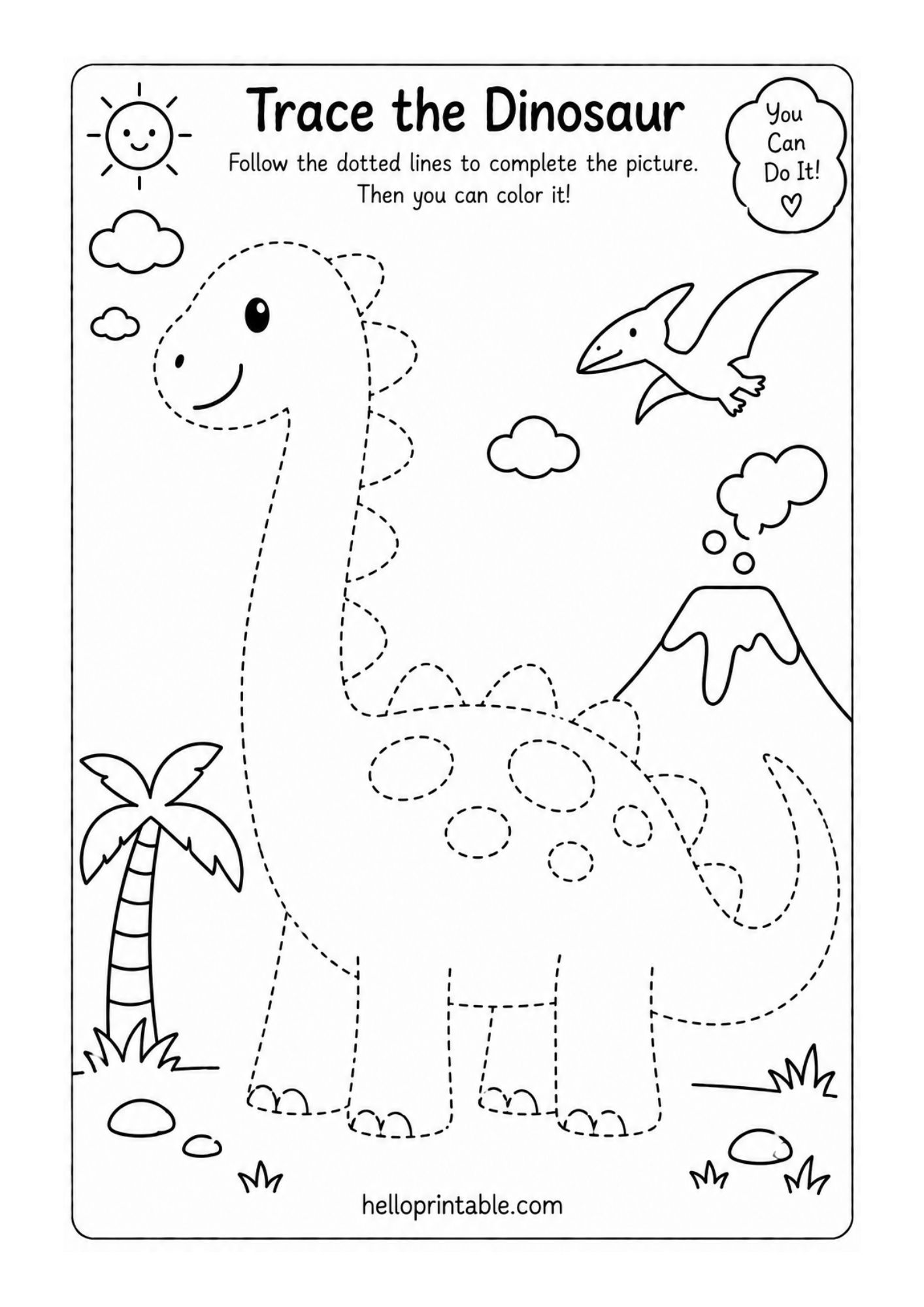
Trace the Dinosaur Worksheet
And of course, pencil practice is much more exciting when dinosaurs are involved.
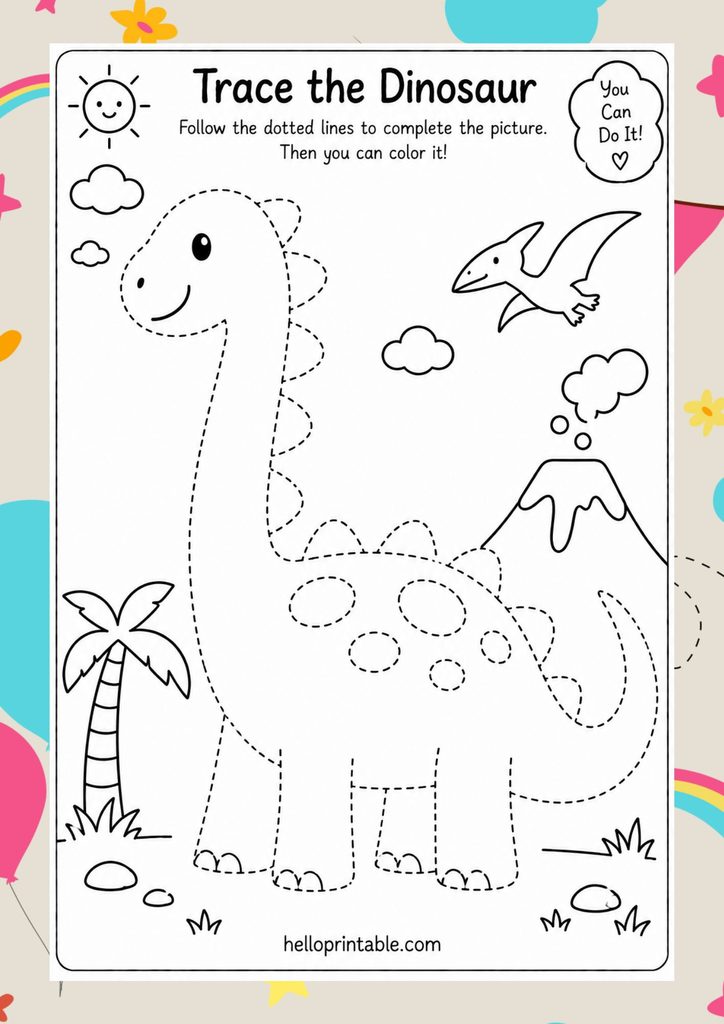
Our dinosaur tracing worksheet gives children a large picture to complete by following the dotted outline.
The dinosaur includes long curves, rounded body shapes, smaller details, and changes in direction, making it a more challenging activity than basic line tracing.
Why Move Beyond Basic Line Tracing?
Beginner tracing worksheets are useful because they isolate individual movements.
A child might practice a page of vertical lines followed by a page of waves or zigzags.
But eventually, real drawing and handwriting require those movements to work together.
Think about drawing something as simple as a house.
The child may need to move the pencil vertically for the walls, diagonally for the roof, horizontally for the windows, and around a curve for the doorway.
Advanced pre-writing worksheets begin bringing those movements together.
Children aren’t expected to write letters yet. They’re simply getting more experience controlling where their pencil goes.
Pencil Control Before Handwriting
Handwriting involves much more than knowing the alphabet.
A child also needs to guide a writing tool intentionally across the page.
That’s why pencil control activities can be useful before and alongside early letter practice.
Tracing gives children a visible path to follow.
Instead of deciding where the pencil should move next, they can concentrate on trying to stay close to the dotted line.
As their control improves, you can gradually introduce smaller paths, more detailed pictures, letters, numbers, and eventually independent writing.
Tracing and Coloring in One Activity
Picture tracing worksheets have another advantage: once children finish tracing, the activity doesn’t have to end.
Let them color the picture.
A traced house can become a colorful home with flowers in the garden.
The flower can have rainbow-colored petals.
The dinosaur can become any color your child imagines.
This extends the activity while giving children additional opportunities to use crayons or pencils.
Use the Beginner and Advanced Packs Together
If your child is just beginning pencil practice, start with our basic tracing worksheets for toddlers and preschoolers.
Those activities introduce simpler movements such as:
straight lines, horizontal lines, diagonal lines, waves, curves, zigzags, and loops.
Once those become comfortable, move into this advanced pack.
The progression can look something like:
Straight lines → curves → zigzags → waves → loops → circles → spirals → mixed patterns → picture tracing → letters and numbers
There is no need to rush through the stages.
Children can repeat whichever activities match their current abilities.
Download the Free Printable Pencil Control Worksheets
After completing, basic tracing worksheet practice, kids can hop onto the next level.
Download the free printable advanced tracing and pencil control worksheets and choose an activity that matches your child’s current skill level.
Start with circles or mixed paths, try the large spirals, and then move on to tracing complete pictures such as the flower, house, and dinosaur.
Children don’t need to complete every page in order.
Pick a worksheet, grab a pencil or crayon, and let those little hands practice.